Accessibility Tools

Skip to main content
เวลาทำการ จันทร์-ศุกร์ เวลา 8.30 น. - 16.30 น.
ขนาดตัวอักษร
สีตัวอักษร

ผู้เขียน: Porntip T.

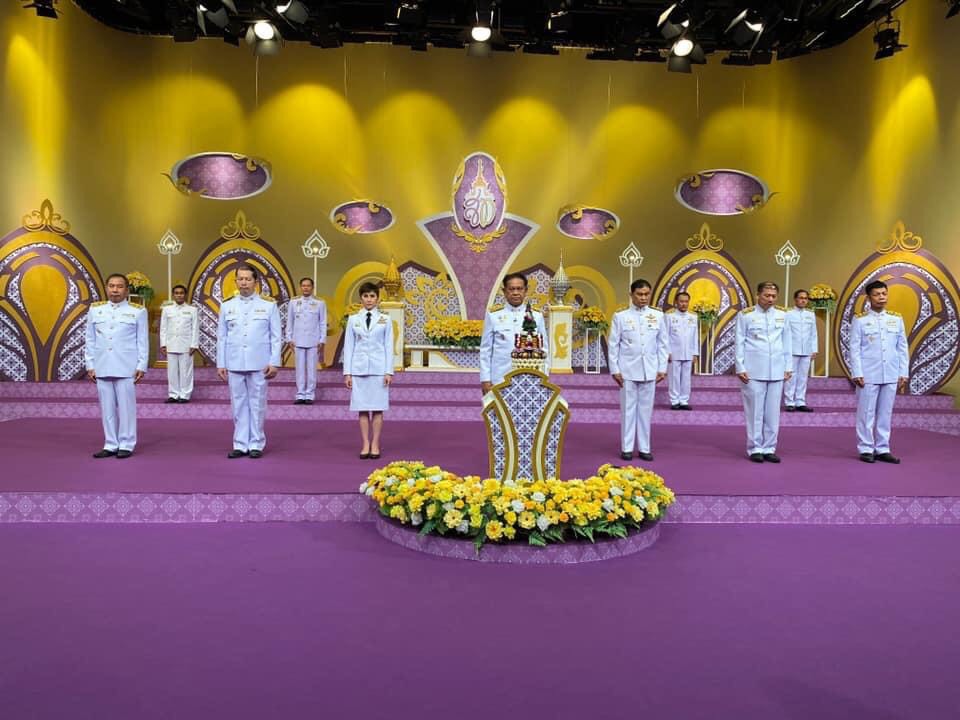
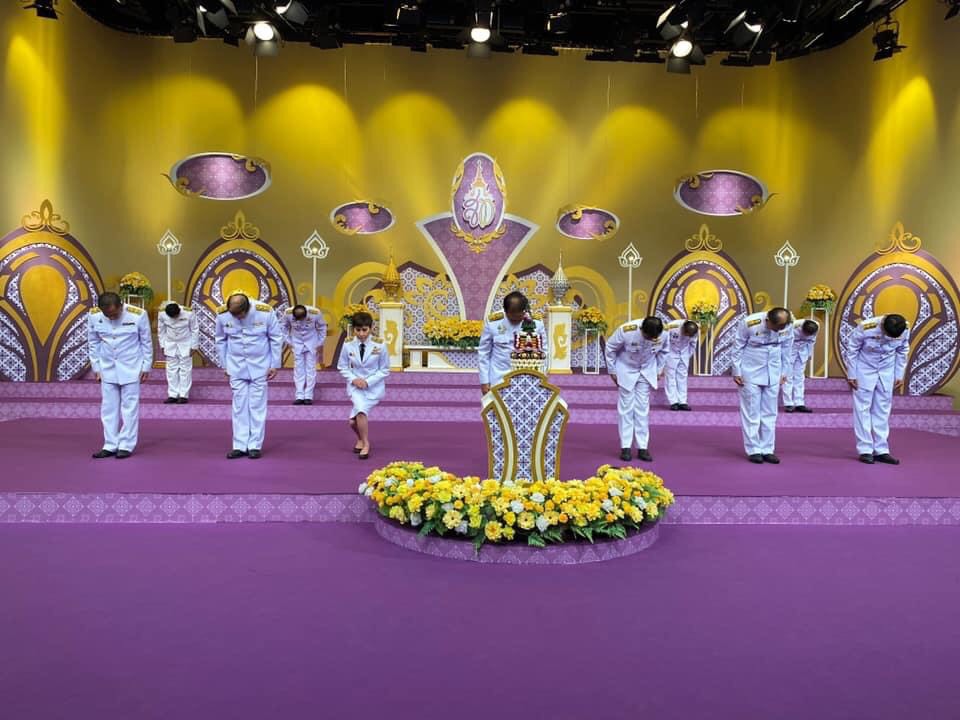
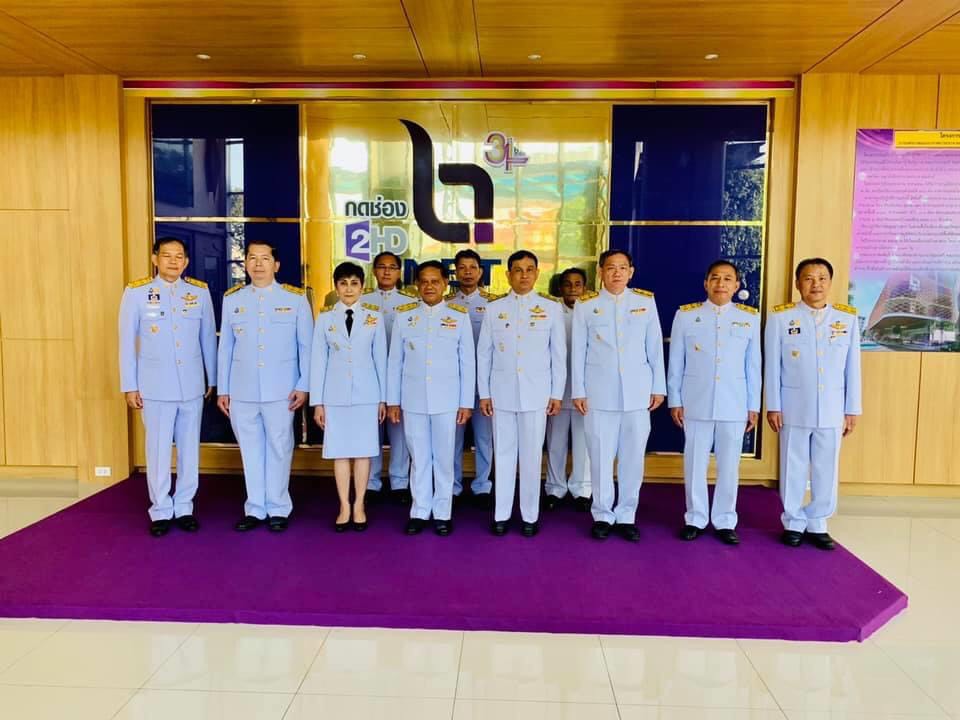
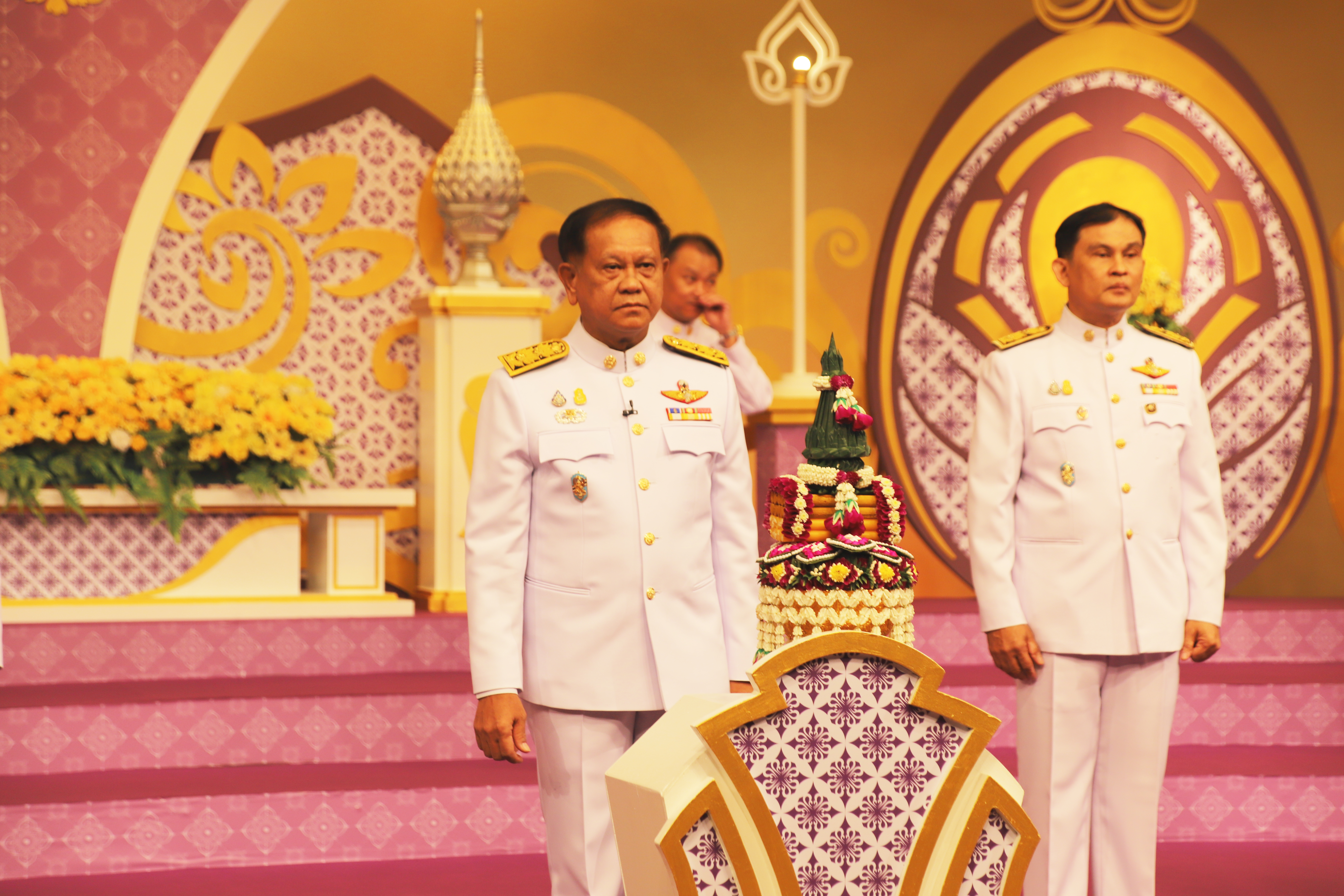
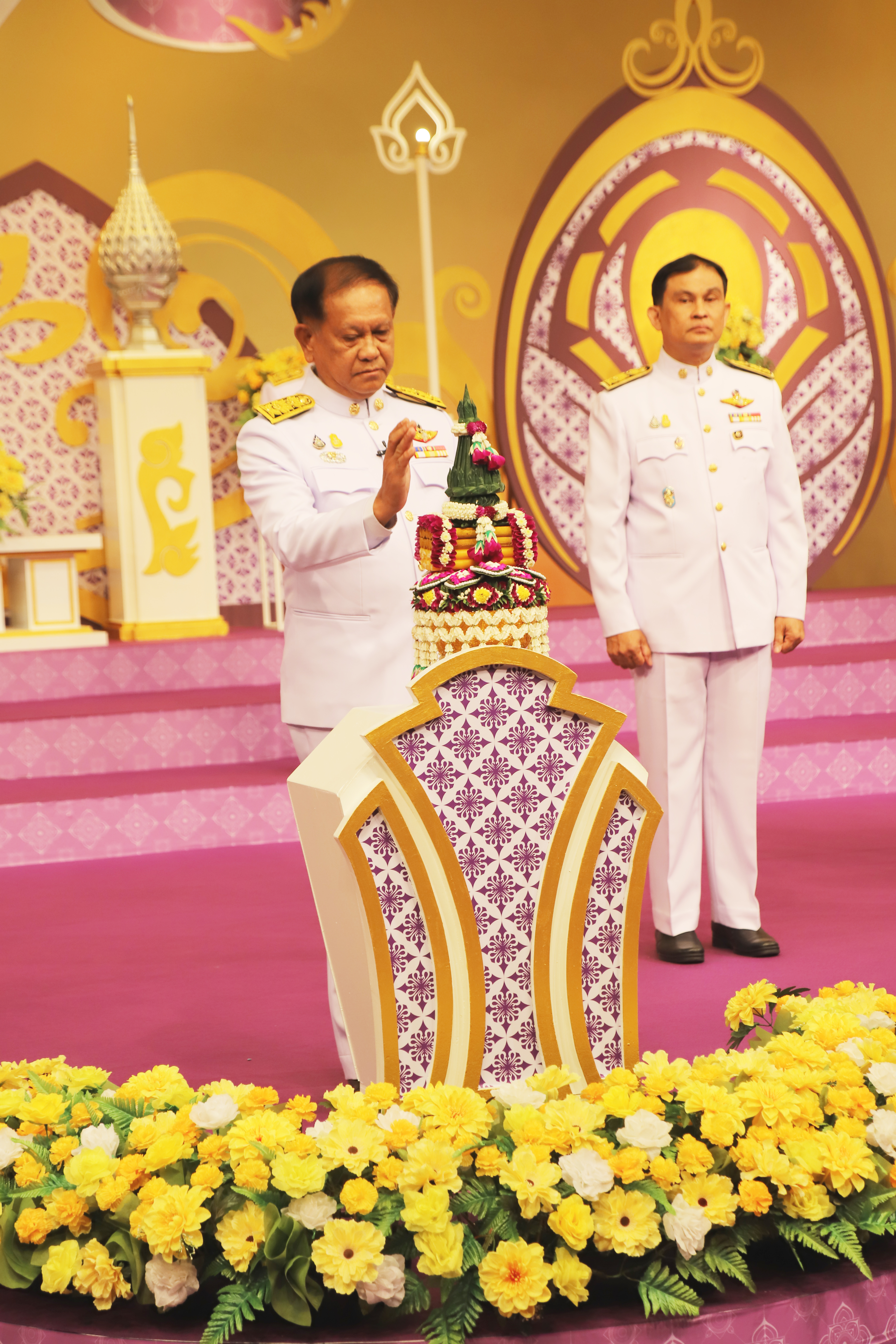
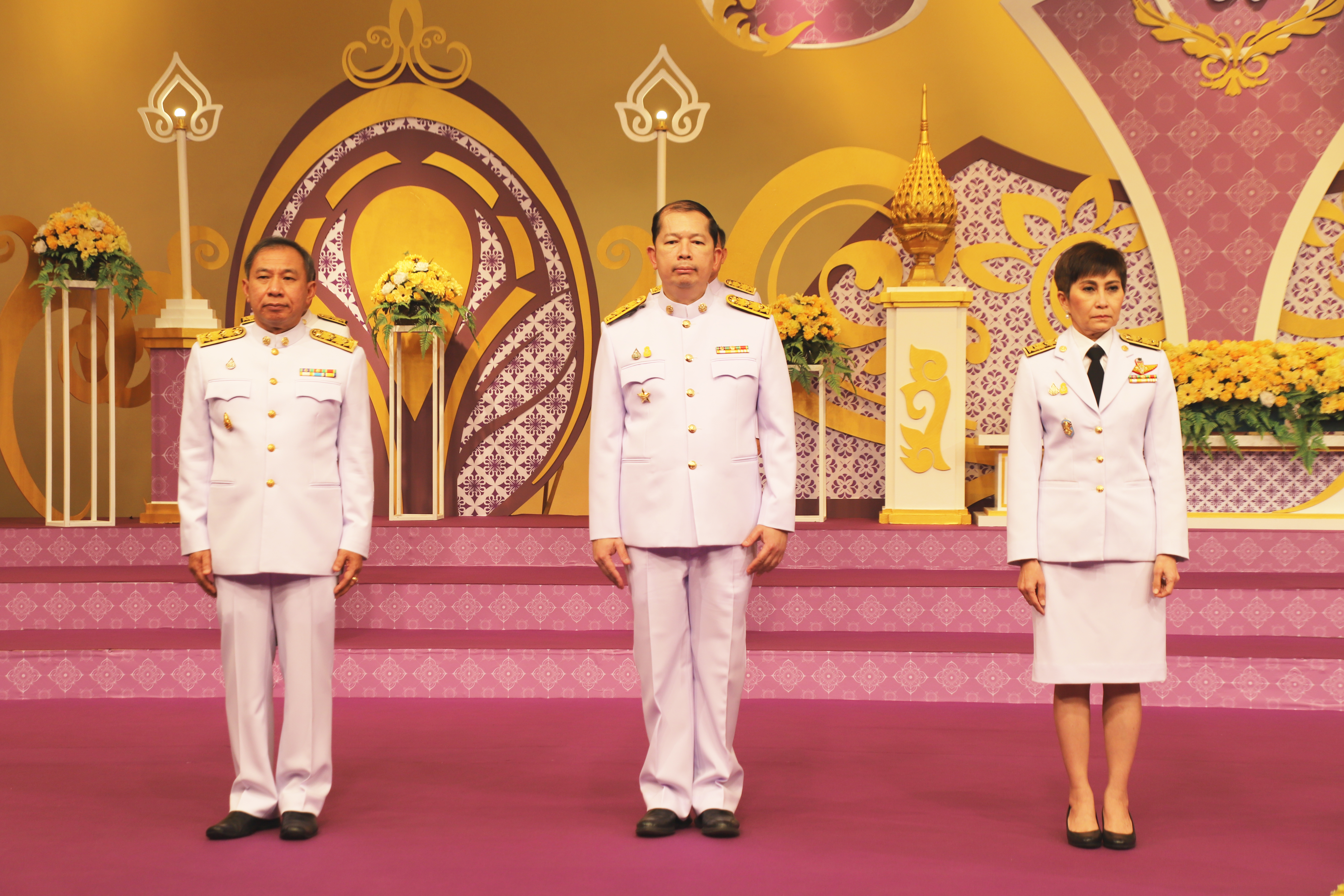
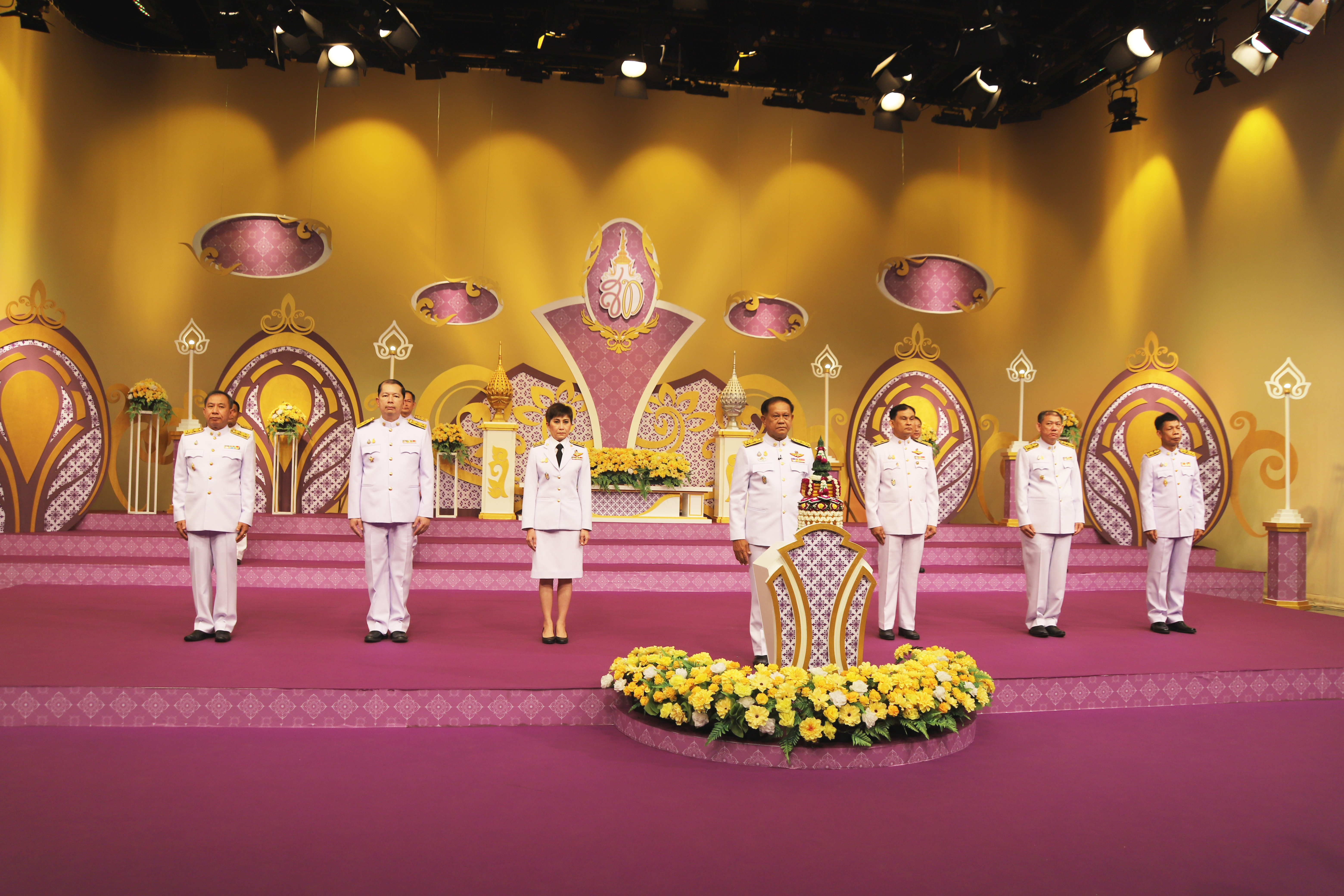
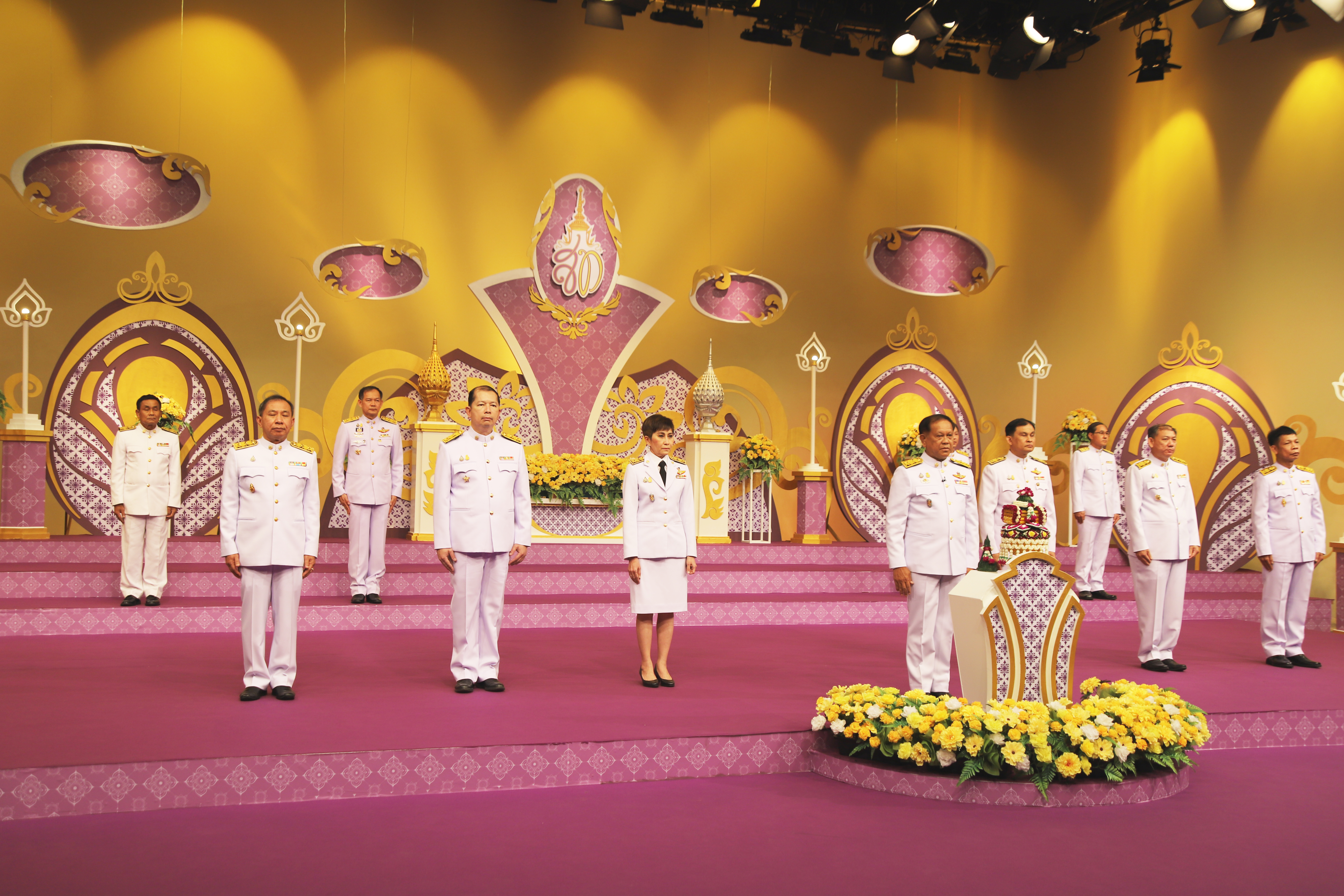
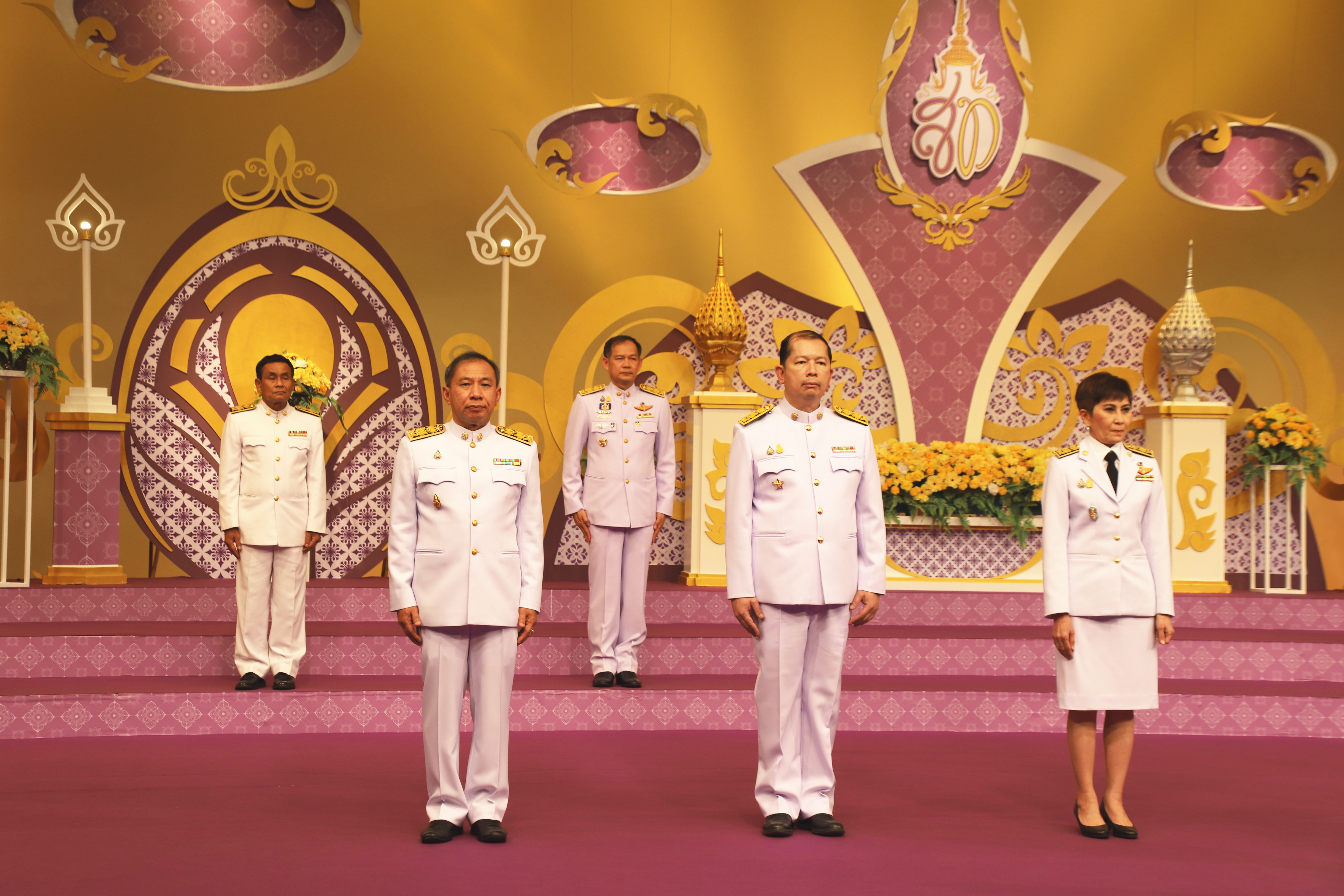
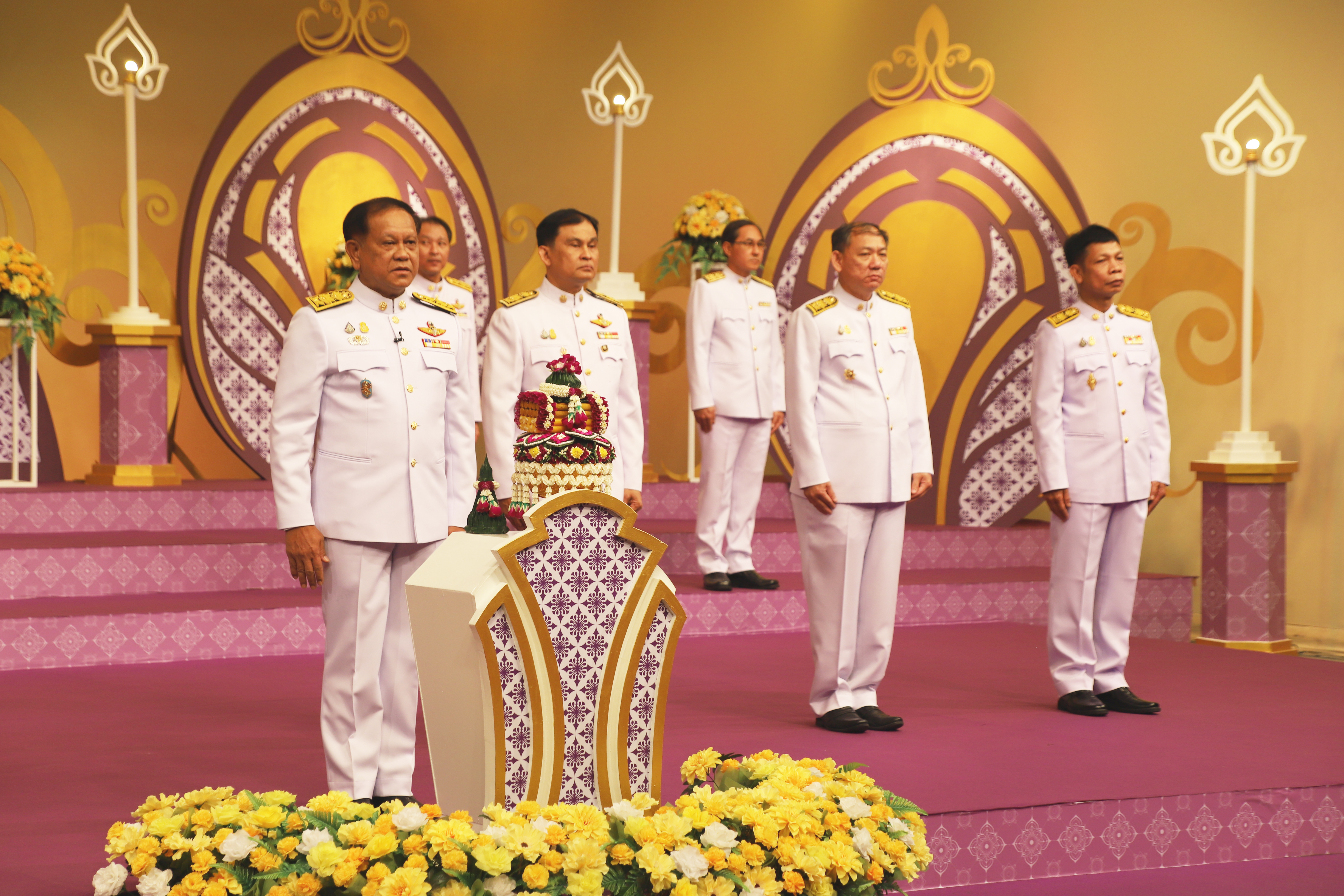
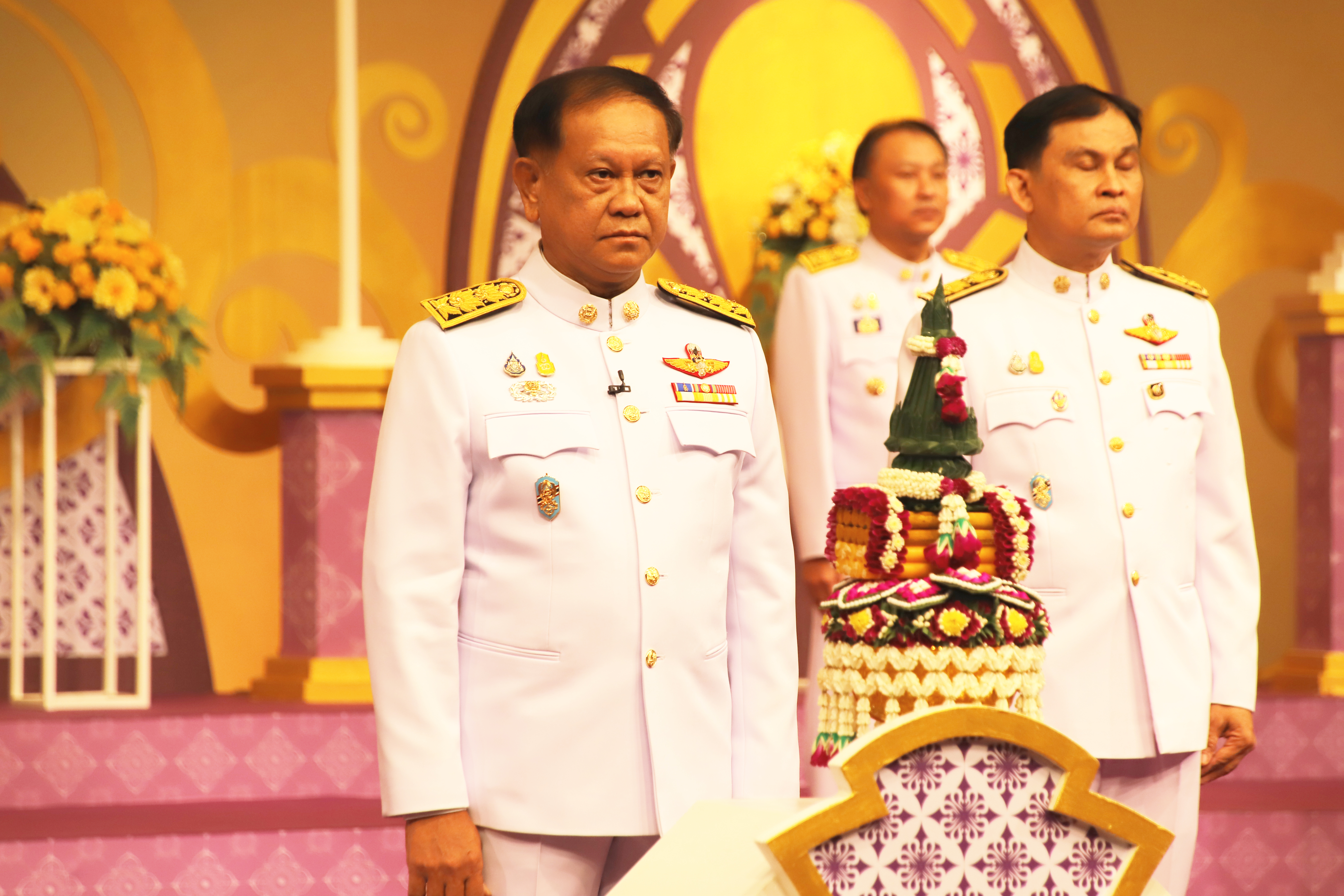
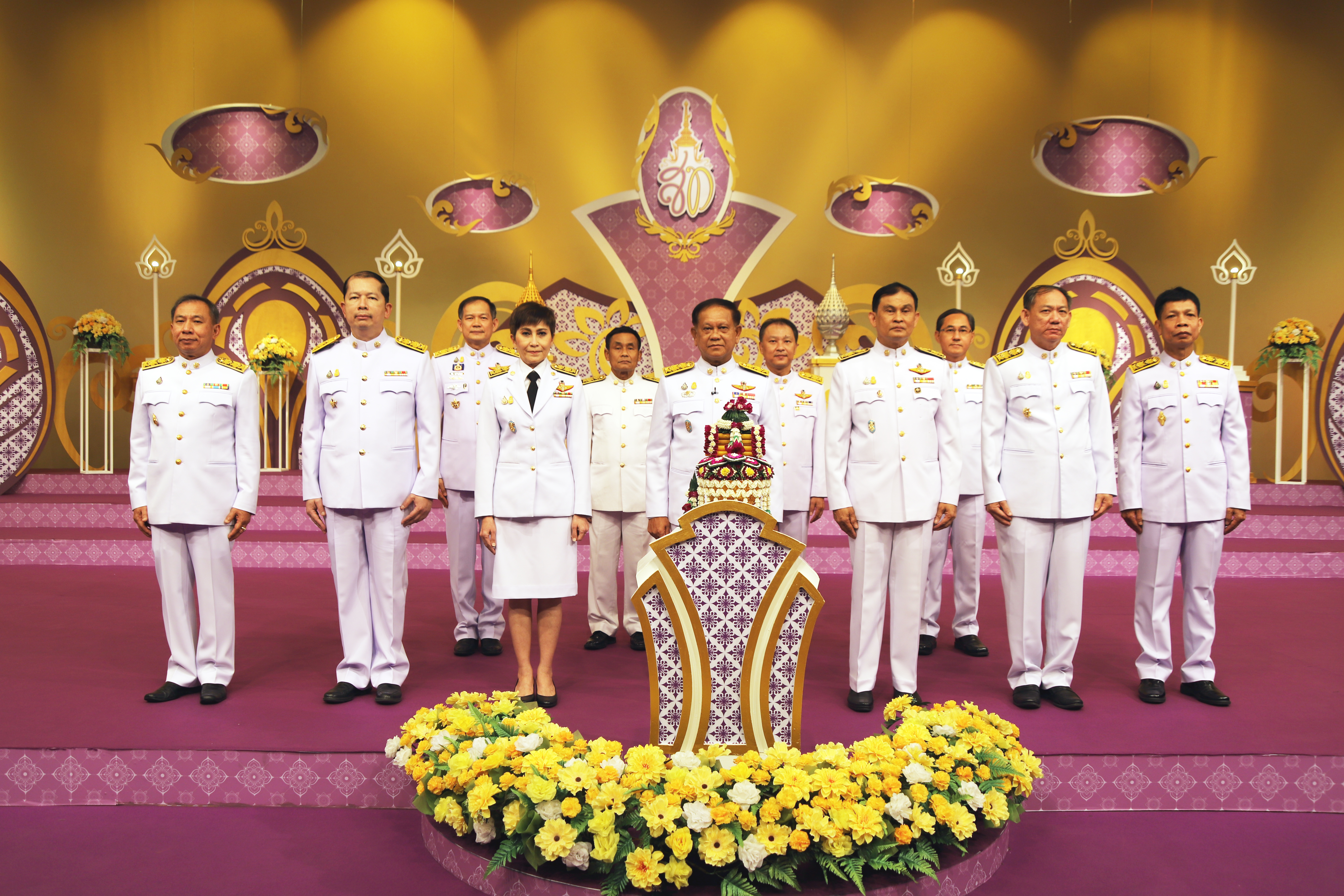
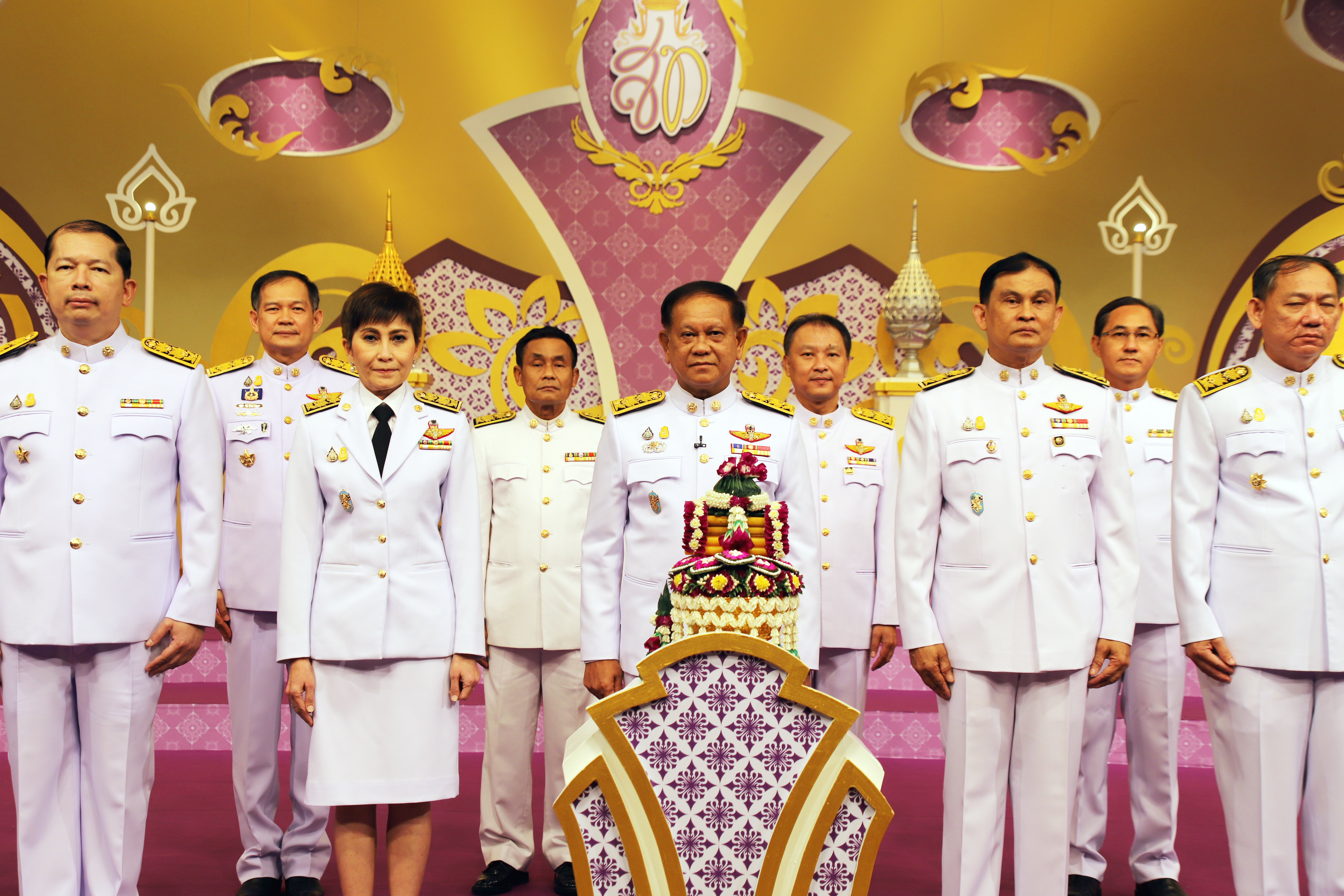
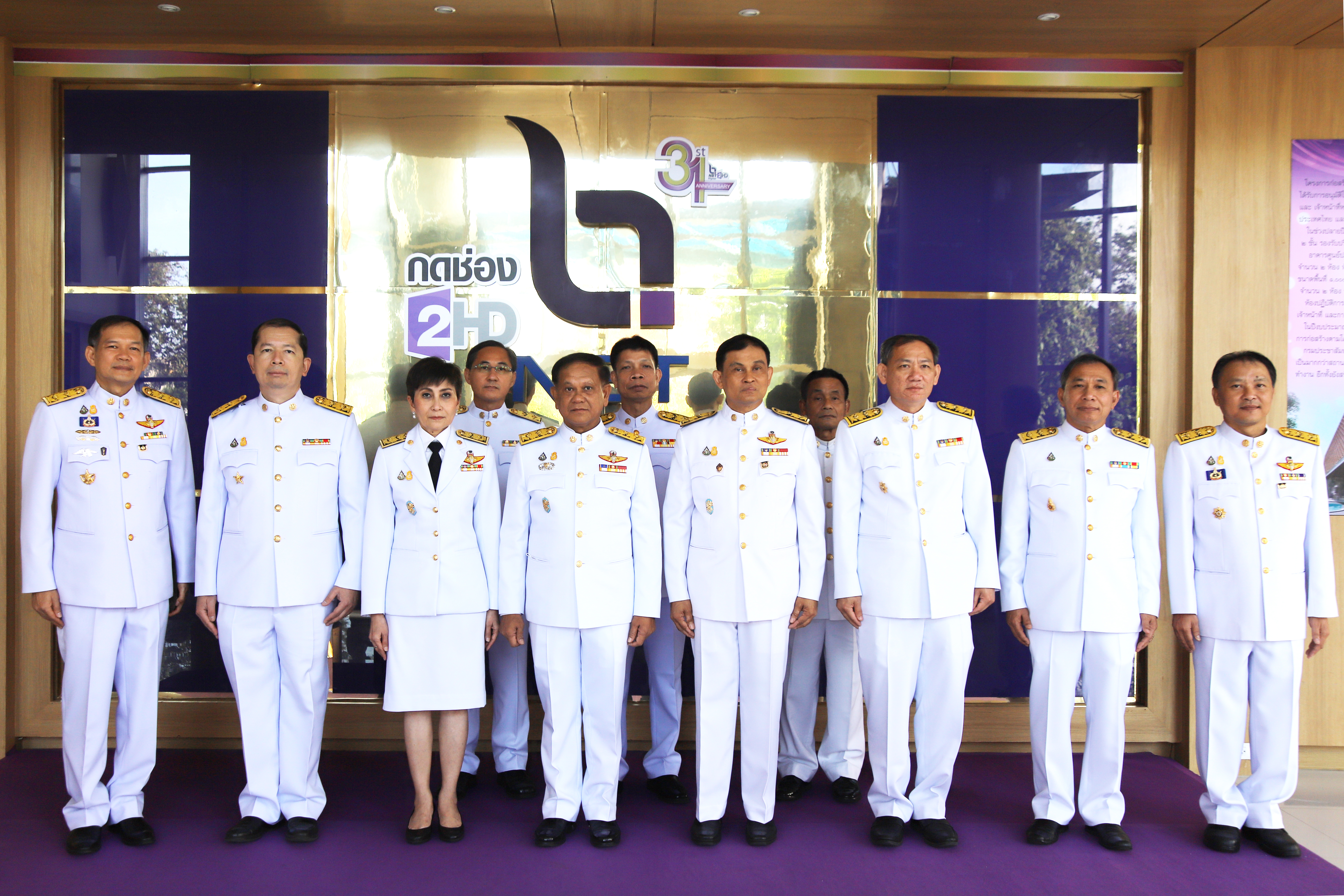
สำนักงานสภาความมั่นคงแห่งชาติ บันทึกเทปรายการพิเศษถวายพระพรชัยมงคล สมเด็จพระนางเจ้าฯ พระบรมราชินี เนื่องในโอกาสวันเฉลิมพระชนมพรรษา ๓ มิถุนายน ๒๕๖๓

               วันนี้ (๑๙ พ.ค. ๒๕๖๓) พลเอก สมศักดิ์ รุ่งสิตา เลขาธิการสภาความมั่นคงแห่งชาติ นำคณะผู้บริหารระดับสูงของหน่วยงานในสังกัด บันทึกเทปรายการพิเศษถวายพระพรชัยมงคล สมเด็จพระนางเจ้าฯพระบรมราชินี เนื่องในโอกาสวันเฉลิมพระชนมพรรษา ๓ มิถุนายน ๒๕๖๓ เพื่อแสดงความจงรักภักดีและน้อมรำลึกในพระมหากรุณาธิคุณที่ทรงมีต่อพสกนิกรชาวไทย

ณ สถานีวิทยุโทรทัศน์แห่งประเทศไทย (NBT) ช่อง ๑๑
วันที่ ๑๙ พ.ค. ๒๕๖๓

Loading

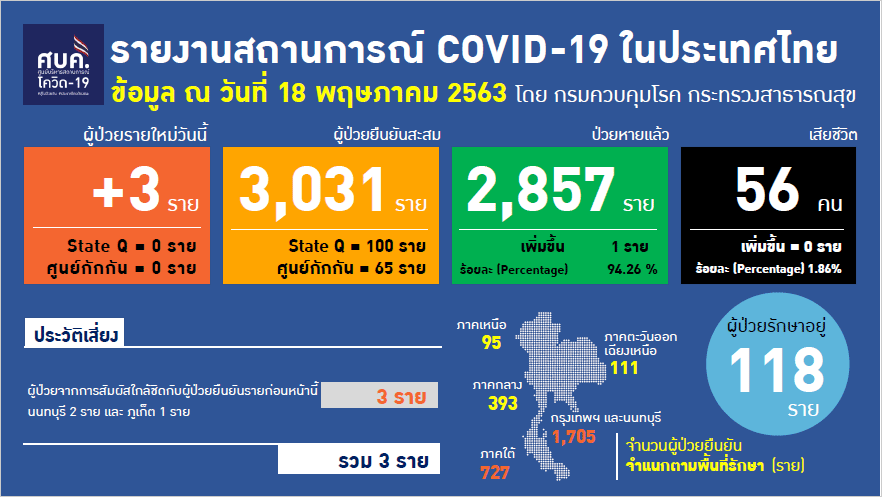
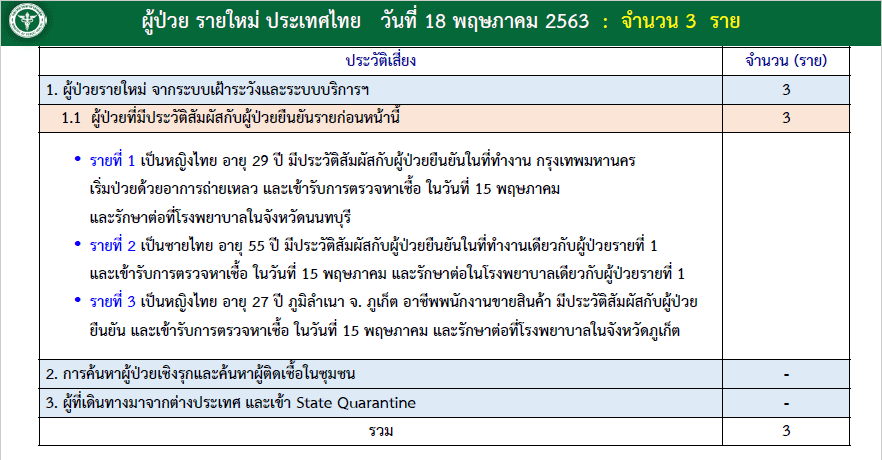
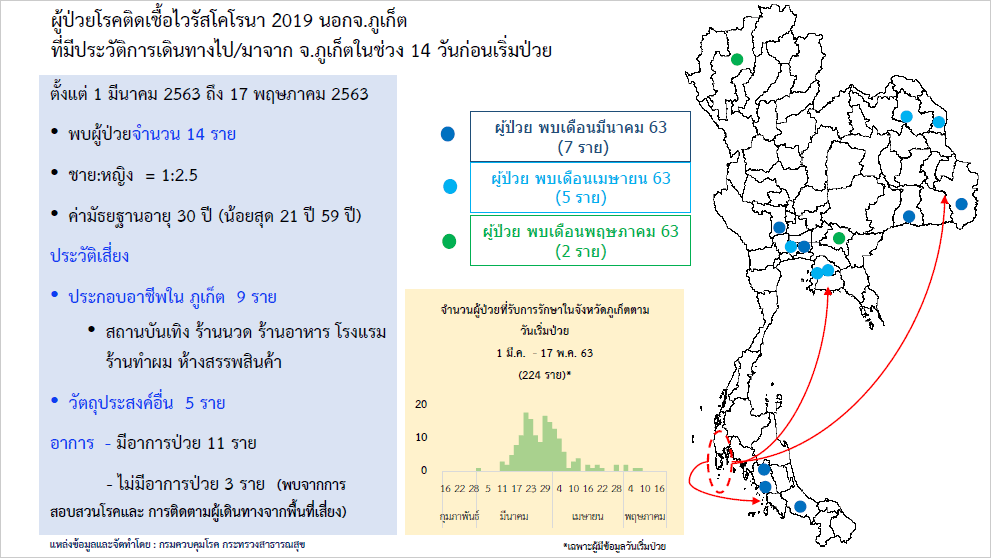
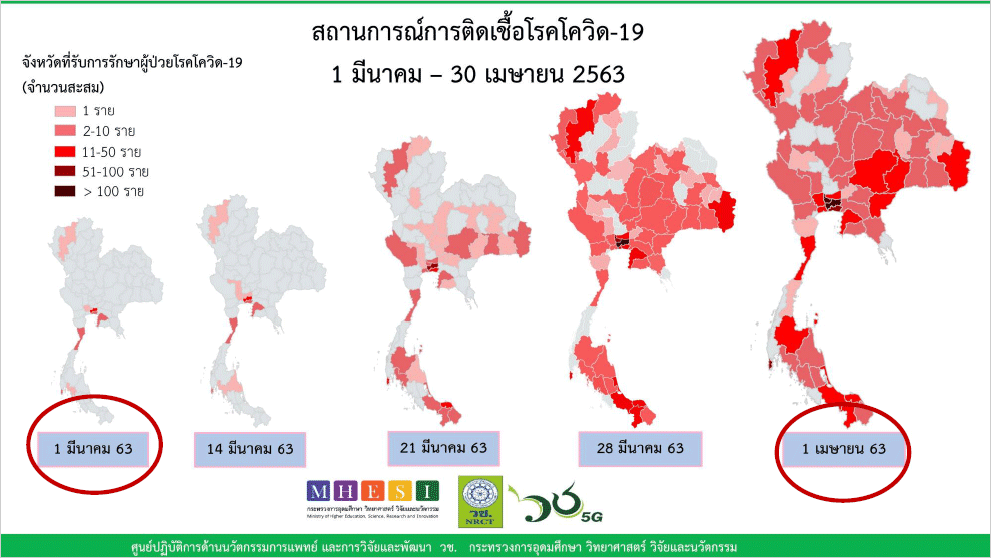
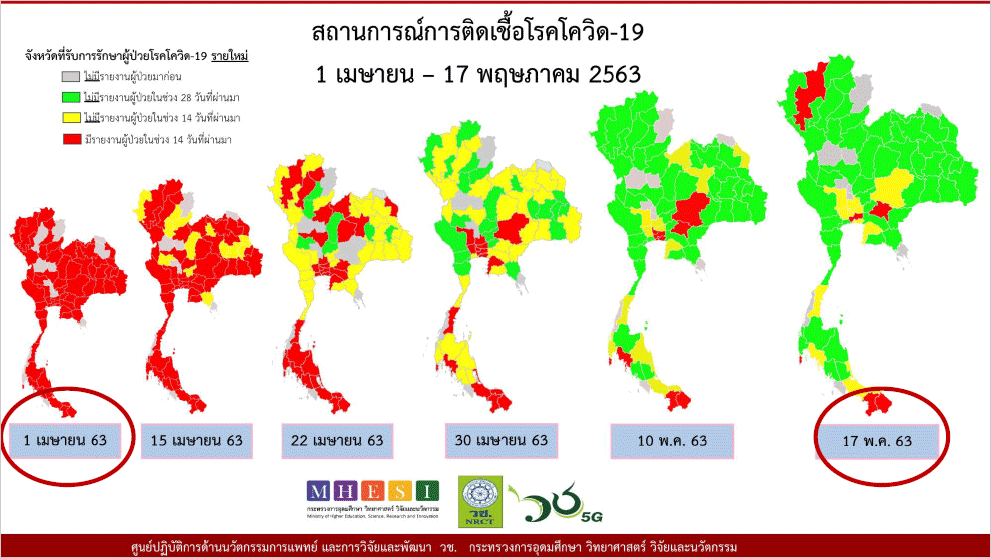
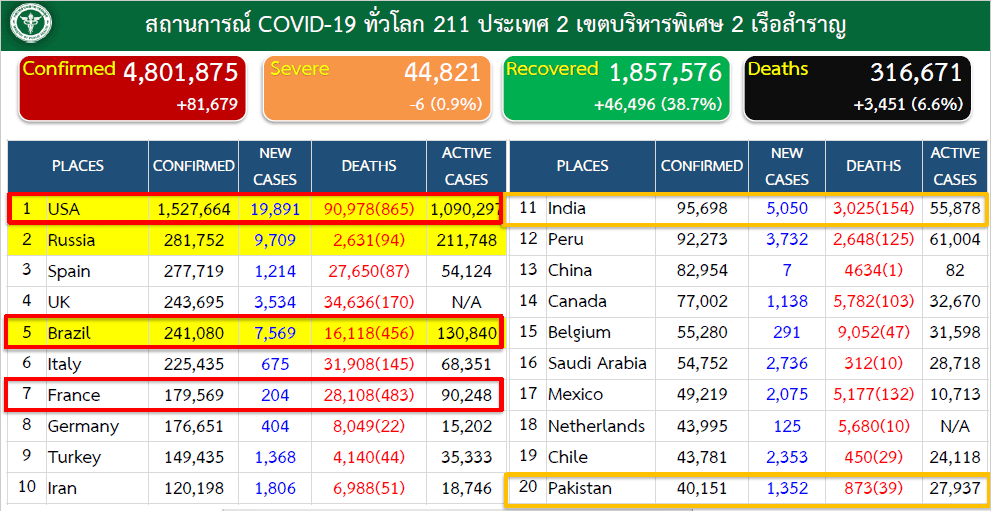
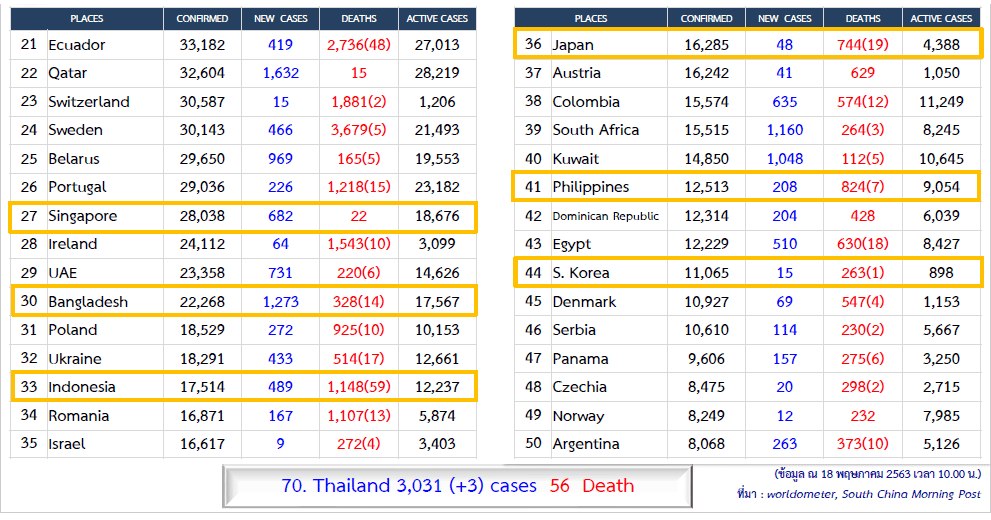
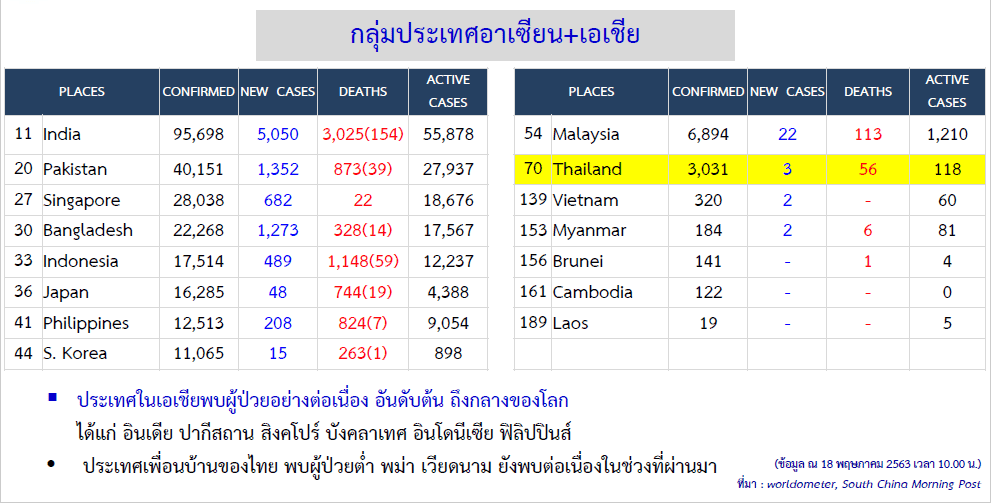
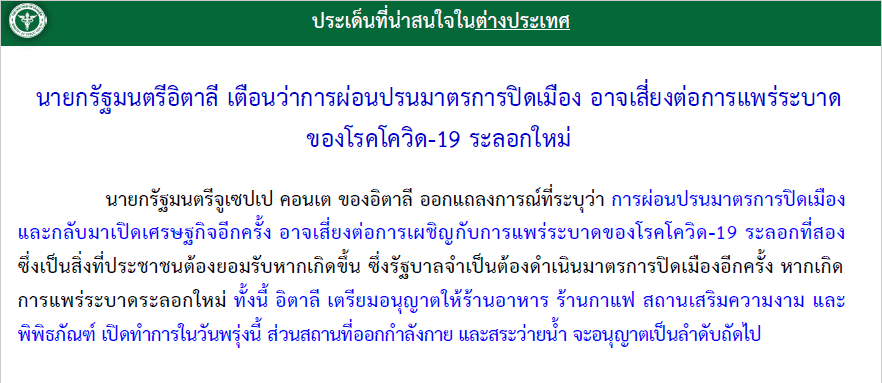
ศบค. แถลงสถานการณ์ COVID-19 (ข้อมูล ณ 18 พฤษภาคม 2563)
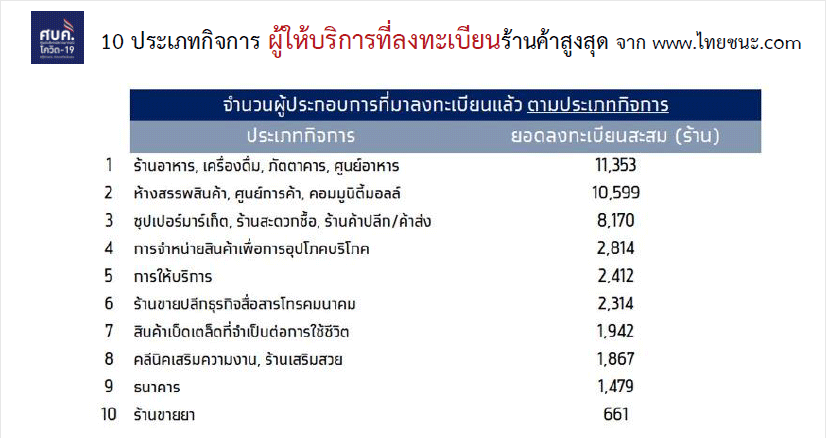
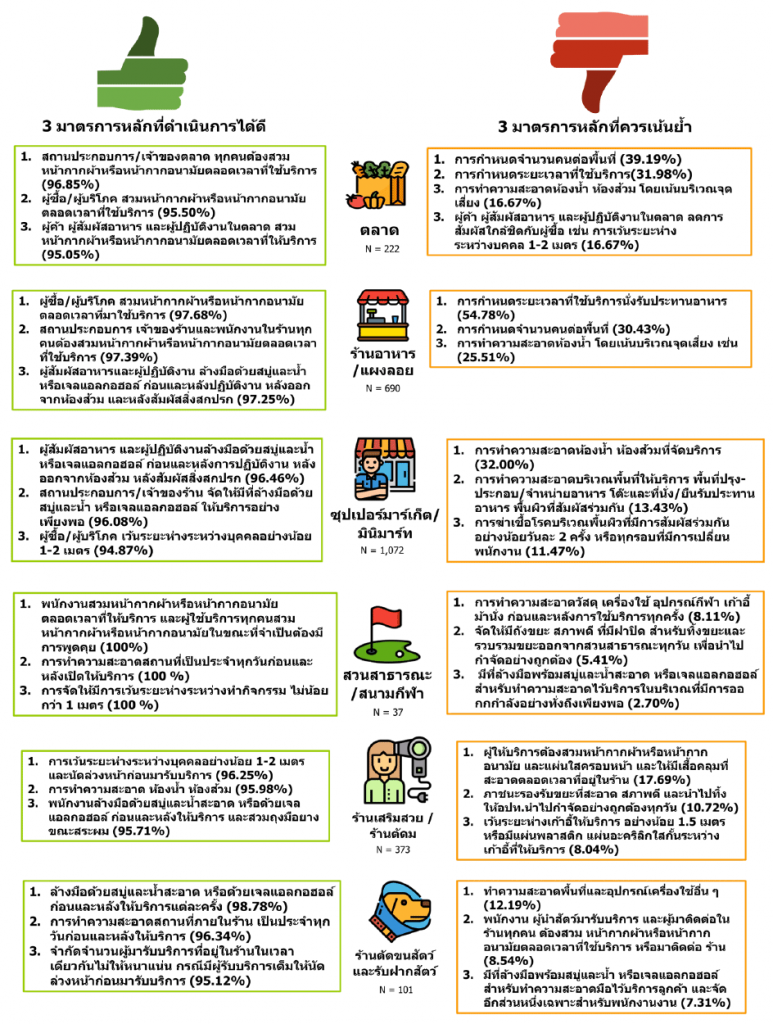
สรุปผลการเฝ้าระวังตามมาตรการป้องกันโรค COVID-19 (มาตรการหลัก)
สำรวจ 6 กลุ่มกิจการ ระหว่าง 7 – 15 พ.ค. จำนวน 2,375 แห่งทั่วประเทศ

ดาวน์โหลดในรูปแบบ PDF  

Loading

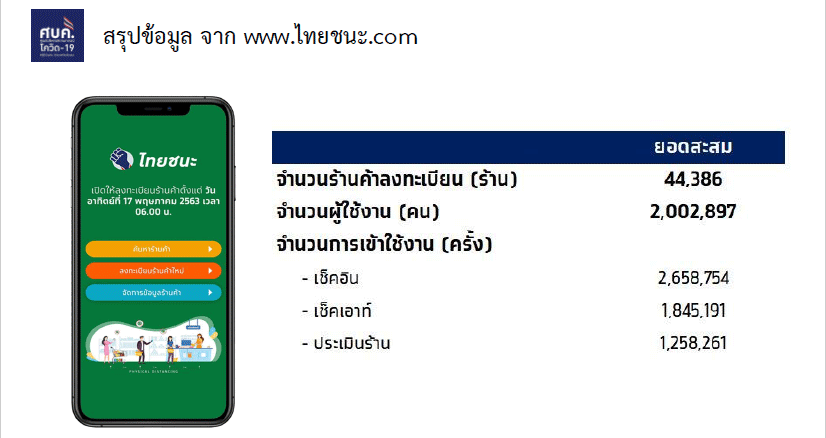
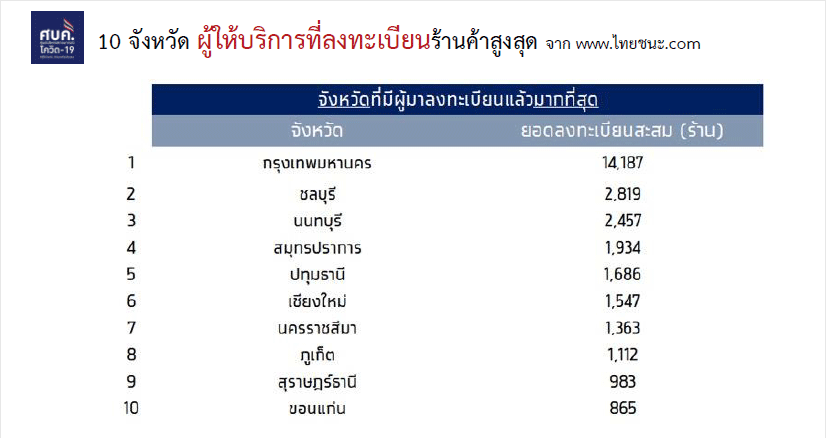
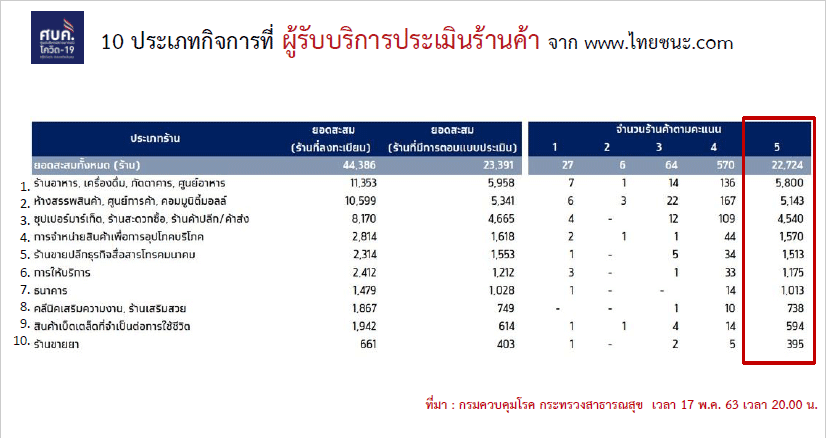
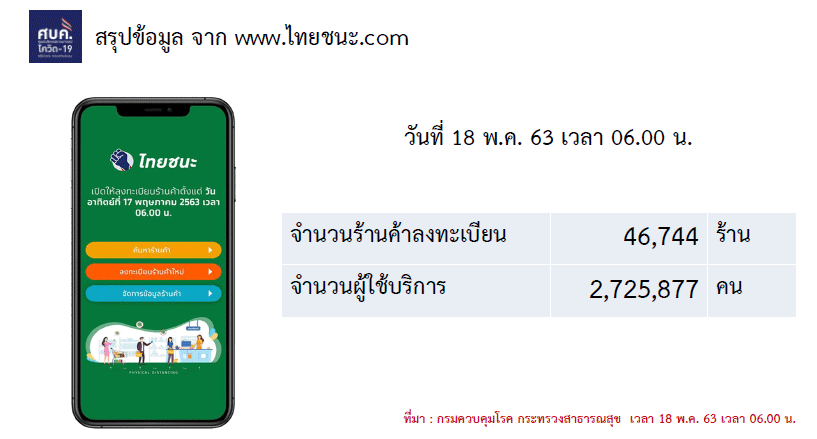
เคลียร์ข้อสงสัย “ไทยชนะ” New Normal ที่คนไทยต้องใช้!

1589611557724

               ท่ามกลางความกังวล ว่าหลังประเทศไทยเริ่มเข้าสู่สถานการณ์ผ่อนคลาย มาตรการป้องกันการแพร่ระบาดของเชื้อ COVID-19 แล้วจะเกิดเหตุการณ์ “ระบาดรอบ 2” เหมือนที่เกิดขึ้นในต่างประเทศนั้น ล่าสุด “ศบค.” หรือ ศูนย์บริหารสถานการณ์ COVID-19 จึงเตรียมเปิดตัวแพลตฟอร์ม “ไทยชนะ” เพื่อติดตามผู้ที่มีความเสี่ยงและจำนวนผู้ป่วยที่อาจเกิดขึ้นหลังจากมีมาตรการผ่อนปรน
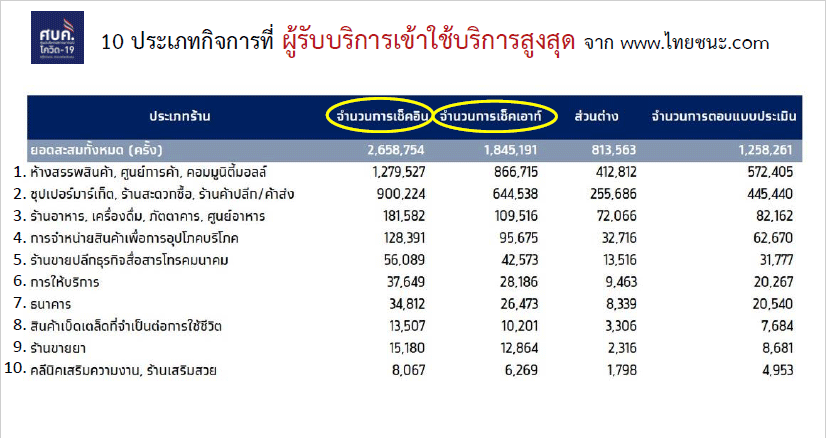
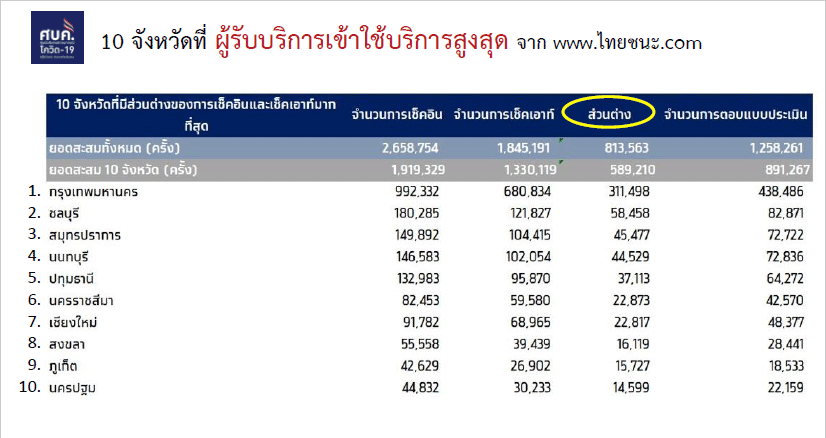
               สำหรับ ไทยชนะ จะเป็นแพลตฟอร์มสำหรับผู้ประกอบการ ห้าง ร้านค้า และประชาชน เพื่อบันทึกความหนาแน่นของผู้ใช้บริการ ทั้งยังช่วยติดตามผู้ป่วย ผู้ต้องสงสัยว่าจะติดเชื้อ COVID-19 ให้เข้าสู่ระบบการตรวจรักษาได้อย่างทันท่วงที เพื่อลดการแพร่ระบาดของโรค

               เรื่องนี้ “นพ.พลวรรธน์ วิทูรกลชิต” ผู้ตรวจราชการกระทรวงดิจิทัลเพื่อเศรษฐกิจและสังคม (DES) ชี้แจง ว่า…

“ไทยชนะจะเป็นแพลตฟอร์มที่ทำให้ทุกคนเข้าถึงการใช้งานได้อย่างง่ายที่สุด ไม่ซับซ้อน เบื้องต้นอาจเป็นบริการออนไลน์ที่ใช้งานได้ง่าย ๆ ผ่านสมาร์ทโฟนที่คนส่วนใหญ่มีใช้งานอยู่แล้ว แต่รายละเอียดจะต้องรอการประกาศจาก ศบค. ในวันพรุ่งนี้ (15 พ.ค. 2563) อีกครั้งว่าจะเป็นรูปแบบใด เช่น เข้าแอปกล้องถ่ายภาพเพื่อสแกน QR Code แล้วเช็คอิน – เช็คเอาท์ได้เลย หรือต้องใช้ช่องทางอื่น หรือเป็นแอปพลิเคชัน รวมถึงเรื่องช่องทางการลงทะเบียนของผู้ประกอบการด้วย ว่าจะเป็นเว็บไซต์ใด”

               ส่วนเรื่องของขั้นตอนการลงทะเบียน และใช้งาน แพลตฟอร์มไทยชนะ นั้น

               “ผู้ประกอบการ” จะต้อง…

               1. ทำการลงทะเบียนผ่านเว็บไซต์ เพื่อรับ QR Code โดยร้านหรือผู้ประกอบการที่จำเป็นต้องลงทะเบียน เบื้องต้น จะเป็น “กิจกรรม” ที่แบ่งประเภทตามประกาศของ ศบค. ที่ได้รับอนุญาตให้ผ่อนคลายแล้ว

               2. นำ QR Code ที่ได้ ไปติดไว้บริเวณหน้าร้าน เพื่อให้ลูกค้าได้สแกนทั้งตอนเข้าและออกจากร้าน

               ส่วน “ลูกค้า” ที่เข้าใช้บริการ จะต้อง…

               1. เข้าสู่แพลตฟอร์มไทยชนะ เพื่อสแกน QR Code ของร้านก่อนเข้าใช้บริการ

               2. ต้องลงทะเบียนเข้าใช้งานด้วยเบอร์โทรศัพท์และถ่ายภาพเพื่อยืนยัน พร้อมกับตอบคำถามประเมินความเสี่ยง 4 ข้อ ให้แอปทำการประเมินความเสี่ยงเบื้องต้นของผู้ใช้งาน

               3. เมื่อใช้บริการเสร็จสิ้นจนออกจากร้าน ก็ต้องสแกนอีกครั้งคล้ายเป็นการเช็คเอาท์ เพื่อทำให้ระบบทราบความหนาแน่นของการเข้าใช้บริการ ณ สถานที่เหล่านั้น

               อย่างไรก็ตาม นพ.พลวรรธน์ ยืนยันว่า ข้อมูลที่ได้รับจากการเข้าใช้บริการในแต่ละสถานที่จะถูกเก็บเป็นความลับ จัดเก็บข้อมูลโดยกรมควบคุมโรค กระทรวงสาธารณสุข โดยแพลตฟอร์มไทยชนะจะเป็นประโยชน์ต่อทุกฝ่ายโดยเฉพาะผู้ประกอบการ ที่ไม่จำเป็นต้องเสียเวลาจดบันทึกจำนวนลูกค้าด้วยวิธีต่าง ๆ ทั้งยังสามารถมอบส่วนลดหรือคูปองแก่ลูกค้าผ่านช่องทางดังกล่าว ขณะที่ ผู้บริโภคก็จะได้รู้ว่าสถานที่นั้นมีความหนาแน่นของการใช้งานหรือไม่ และสามารถให้คะแนนร้านจากการเข้าใช้งานด้วย

ข่าวที่เกี่ยวข้อง รัฐปัดข่าว App “ไทยชนะ” ล้วงข้อมูลส่วนตัว

ดูข่าวต้นฉบับ

Loading

เลขาธิการสภาความมั่นคงแห่งชาติ คลายข้อกังวลประชาชน เกรงปลดล๊อกเฟส 2 แล้วการแพร่ระบาดกลับมาอีก

             พลเอก สมศักดิ์ รุ่งสิตา เลขาธิการสภาความมั่นคงแห่งชาติ ร่วมแถลงข่าว ศูนย์บริหารสถานการณ์โควิด-19 (ศบค.) ประจำวันที่ 16 พ.ค. 63 ณ ตึกสันติไมตรี ทำเนียบรัฐบาล (ช่วงเวลาที่ 34:00 – 44:00)

ข้อกังวลใจเกี่ยวกับเรื่องของการคลายล๊อก ระยะที่ 2 มีข้อกังวลว่าหากปลดล็อกเฟส 2 แล้วมีผู้ติดเชื้อเพิ่มสูงขึ้น ภาครัฐมีมาตรการวางแผนเตรียมการล่วงหน้าหรือไม่ อย่างไร

               พล.อ.สมศักดิ์ฯ แจง ที่ประชุม ศบค. อนุมัติให้มีการผ่อนคลายระยะที่ 2 เพิ่มมากขึ้น ซึ่งเป็นผลจากการประเมินระยะที่ 1 ทำไว้ค่อนข้างดีตัวเลขผู้ติดเชื้อลดลงเป็นลำดับ รวมทั้งความร่วมมือของประชาชนทั่วไปอยู่ในเกณฑ์สูงมาก เป็นผลดีที่ทำให้การผ่อนคลายในระยะที่ 2 มีออกมา เป็นข้อกำหนดฉบับที่ 7 : ข้อกำหนดออกตามความในมาตรา 9 แห่งพระราชกำหนดการบริหารราชการในสถานการณ์ฉุกเฉิน พ.ศ. 2548 (ฉบับที่ 7) เรียบร้อยแล้ว

ศบค16-3

               การผ่อนคลายในระยะที่ 2 จะเป็นกิจกรรม/กิจการ ที่มีความเสี่ยงต่อการระบาดของโรคอยู่ในเกณฑ์ปานกลาง แต่มีผลต่อเศรษฐกิจและสังคมค่อนข้างสูง การผ่อนปรนเพื่อให้การดำรงชีวิตมีความสะดวกสบายยิ่งขึ้น อีกทั้งเศรษฐกิจสามารถเดินหน้าต่อไป

               เพราะฉะนั้นทุกๆ ระยะ ไม่ว่าจะเป็นระยะที่ 2, 3, 4 ที่จะดำเนินต่อไปนั้น ก็จะมีความเสี่ยงเพิ่มขึ้นเป็นลำดับแต่เป็นความเสี่ยงที่เราได้ใคร่ครวญแล้วว่า ต่อให้มีความเสี่ยงก็ยังอยู่ในความสามารถที่จะควบคุมได้ และสาธารณสุขก็ยังมีขีดความสามารถรองรับความเสี่ยงนี้ได้ และหากพบกิจกรรม/กิจการใด ก่อให้เกิดการแพร่เชื้อ สิ่งที่เราต้องทำก็คือ สำรวจว่าจะต้องปิดเป็นจุดหรือเป็นรายกิจกรรม ขึ้นอยู่กับความหนักเบาของตัวเลขการแพร่เชื้อ ทั้งนี้ กิจกรรมที่เปิดไปแล้ว ไม่ว่าจะเป็นกลุ่ม 1 หรือ กลุ่ม 2 ถ้าพบว่าเป็นต้นเหตุของการแพร่เชื้อก็สามารถปิดได้หรือเพิ่มมาตรการที่เข้มข้นได้

กรณีปลดล็อกเฟส 2 แล้ว ยังสามารถเดินทางไปต่างจังหวัดเป็นปกติหรือไม่ หรือเดินทางไปแล้ว จำเป็นต้องกักตัวหรือไม่

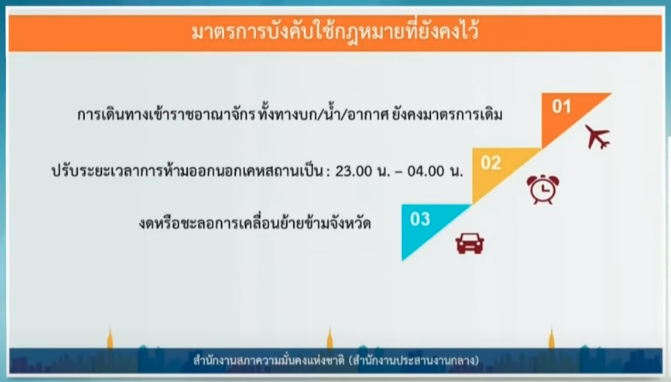
               พล.อ.สมศักดิ์ฯ ย้ำว่า มาตรการบังคับที่ออกมาควบคู่กับการผ่อนคลายในเฟส 2 ยังคงมี 3 มาตรการหลัก คือ 1) การเดินทางเข้าราชอาณาจักรทั้งทางบก/น้ำ/อากาศ ยังคงมีความเข้มข้นในระดับเดิม นั่นหมายความว่ายังคงป้องกันไม่ให้มีการแพร่เชื้อที่เกิดจากการนำเข้าจากต่างประเทศ ยังไม่อนุญาตให้เครื่องบินพาณิชย์เข้ามา 2) การปรับระยะเวลาเคอร์ฟิวหรือการออกนอกเคหสถานในเวลา 23.00 – 04.00 น. ที่สำคัญคือ 3) ยังเชิญชวนให้ชะลอการเดินทางเคลื่อนย้ายข้ามจังหวัดอยู่ ทั้งนี้ ไม่ได้ห้าม แต่หากมีความจำเป็นที่จะต้องเดินทางเมื่อไปถึงปลายทาง หากจังหวัดนั้นมีมาตรการที่เข้มข้น ก็ต้องปฏิบัติตามที่กำหนด

               เมื่อถามว่า มีข้อเสนอแนะจากประชาชนอยากให้ปรับเวลาเคอร์ฟิวเป็นเวลา 03.00 น. ได้หรือไม่ เพราะมีประชาชนที่จะต้องขายของในตอนเช้าเพื่อที่จะไม่ได้รับผลกระทบในเรื่องของเวลา พล.อ.สมศักดิ์ฯกล่าวว่า ขอรับไว้เป็นข้อพิจารณาในระยะต่อไป ที่จะลดระยะเวลาเคอร์ฟิวลง โดยจะดูตามสถานการณ์อีกครั้ง

มาที่เรื่องข้อกำหนด ที่มีการกำหนดว่าให้คลินิกเวชกรรมเสริมความงาม สถานเสริมความงาม และร้านทำเล็บ ให้เปิดดำเนินการได้เฉพาะการเสริมความงาม เรือนร่างและผิวพรรณ ไม่รวมถึงการเสริมความงามบริเวณใบหน้า ข้อสอบถามจากภาคประชาชนทำไมในเมื่อทำฟันทำทันตกรรมได้ ทำไมถึงไม่อนุญาตให้เสริมความงามบริเวณใบหน้า

               พล.อ.สมศักดิ์ฯ กล่าวว่า ข้อสงสัยเรื่องสถานเสริมความงามที่ให้เปิดได้แต่ยังไม่รวมถึงการทำที่เกี่ยวกับใบหน้านั้น เนื่องจากเรายอมเสี่ยงในบางเรื่องเพื่อชดเชยความสะดวกสบายของประชาชนและเพื่อกระตุ้นเศรษฐกิจบางตัว กรณีของการทำฟันทำทันตกรรมเป็นกิจกรรมที่จำเป็นต่อการดำรงชีวิตแต่ยังจะต้องมีมาตรการที่เข้มงวด ซึ่งการเสริมความงามนั้นเราก็ยอมแต่ไม่ใช่ในเรื่องของใบหน้าเพราะยังถือว่ามีความเสี่ยงที่จะติดเชื้อจากดวงตาได้ ซึ่งเป็นเหตุผลเดียวกับที่เราขอให้มีการล้างมือบ่อย ๆ และอย่าจับใบหน้า รวมถึงการจำกัดเวลาต่อกิจกรรมนั้น ๆ ให้ใช้เวลาให้น้อยที่สุด อย่างไรก็ตาม ตนจะขอรับไว้พิจารณาในการผ่อนคลายในเฟส 3 ซึ่งถ้าหากหมออนุญาตตนก็ไม่มีปัญหา

คำถามเพิ่มเติมจากสำนักข่าวไทยรัฐทีวี ที่บอกว่า มีประชาชนแจ้งและร้องเรียนเข้ามาว่า มีร้านค้า (ขออนุญาตไม่บอกชื่อ) ที่มีชื่อเสียงแห่งหนึ่งในกรุงเทพฯ ไม่มีมาตรการป้องกัน ไม่มีการตั้งจุดตรวจอุณหภูมิหรือเว้นระยะห่าง ทาง ศบค. รวมถึงรัฐบาล และ กทม. จะดำเนินการอย่างไร

               พล.อ.สมศักดิ์ฯ กล่าวว่า หลังไมค์คงต้องขอชื่อร้าน เพราะว่าเรามี จนท.ที่จะไปตรวจสอบอยู่แล้ว ในทุกๆมาตรการที่ออกไป ทั้งหน่วยงานความมั่นคง จนท.สาธารณสุข หรือ จนท.ของ กทม. หรือจนท. ของจังหวัดที่แต่งตั้งขึ้น เพราะฉะนั้นทุกๆ มาตรการที่เราออกไปก็จะมีคนไปตรวจ อาจจะไม่ทั่วถึงบ้าง เพราะ จนท.มีจำกัด แต่อย่างไรก็ตามต้องขอความร่วมมือว่ามาตรการที่เราจะออกไป มาตรการ กำกับกิจกรรม/กิจการ ที่ผ่อนคลายในเฟส 2 ก็ขอให้ปฏิบัติตามโดยอย่างเคร่งครัด เมื่อ จนท.ไปตรวจ ถ้าพบความบกพร่องครั้งแรกอาจจะตักเตือนหากไม่ปรับปรุง ก็เป็นไปได้ที่จะปิดเป็นจุดๆ ไป หรือถ้ากิจกรรมเหล่านั้นเป็นเครื่องบ่งชี้ว่าเป็นที่แพร่ระบาดของโรคเป็นวงกว้างก็จำเป็นที่จะต้องปิดกิจกรรมเหล่านั้นต่อไป จึงต้องขอความร่วมมือจากทุกภาคส่วน

               สุดท้ายขอให้ประชาชนมั่นใจว่าก่อนที่เราจะผ่อนปรนกิจการ/กิจกรรมใด ในแต่ละเฟส เราคำนึงถึงอย่างน้อย 2 ปัจจัย คือ สถานการณ์การแพร่ระบาดในประเทศเราเอง เทียบเคียงกับสถานการณ์ในต่างประเทศ เนื่องจากมีหลายประเทศที่ผ่อนคลายเร็ว แล้วทำให้เกิดปัญหาตามมา ซึ่งไม่อยากให้ประเทศไทยเป็นเช่นนั้น เพราะฉะนั้นการผ่อนปรนจะทำด้วยความระมัดระวัง ที่สำคัญที่สุดก็คือความร่วมมือจากทุกภาคส่วน จากประชาชนทุกคน จากผู้ประกอบการ ผู้ประกอบกิจกรรมต่างๆ ก็จะต้องให้ความร่วมมือ ถ้าความร่วมมือดีกิจกรรมมีความเสี่ยงก็ยังสามารถทำให้มีความสมดุลได้

Loading

No international flights in before July

Aviation authority says ban on commercial routes to stay for now

               The Civil Aviation Authority of Thailand (CAAT) on Saturday announced it will renew the ban on international commercial flights into the kingdom until the end of next month to continue the fight against Covid-19.

               The ban was put in place on April 27 amid the Covid-19 outbreak through an order set to expire this month, according to CAAT director-general Chula Sukmanop.

               He said that prolonging the ban would give the authorities more time to fight Covid-19.

               The ban was invoked under Sections 27 and 28 of the 1954 Air Navigation Act, Mr Chula said.

               He said the ban is not absolute as certain flights are still allowed to land, such as those involving state or military aircraft, Covid-19 humanitarian aid, medicine, emergency landings and the repatriation of Thais from overseas.

               Mr Chula said those arriving on the flights are subject to a 14-day quarantine, among other measures imposed by the emergency decree.

               CAAT has the authority to resume both national and international flights. Last week it backtracked on a decision to reopen Phuket International Airport after citing infection risks.

               Meanwhile, Deputy Prime Minister Wissanu Krea-ngam said Prime Minister Prayut Chan-o-cha has ordered officials to study the laws that could be used after the emergency decree is lifted.

               Mr Wissanu said the premier wants to know if there is a legal tool that can be as effective as the emergency decree in containing the novel coronavirus.

               He dismissed speculation that martial law would replace the decree, but said if no other law can be found to control Covid-19, the government will have only the Communicable Diseases Act (CDA) at its disposal.

               Mr Wissanu said the act may not give sufficient legal coverage to deal with the spread of the virus.

               He said the CDA grants autonomy to each provincial governor to take control in their respective areas, adding there are 77 standards available.

               Since the emergency decree was introduced, provincial governors have carried less of a burden in dealing with the economic impact of businesses going under lockdown, Mr Wissanu said, adding the government has centralised power under the decree.

               “We still have about 15 more days to decide whether to keep or end the emergency decree,” he said, referring to the expiry date on May 31.

               In addition, Gen Somsak Roongsita, secretary-general of the National Security Council, responded to concerns raised over a possible resurgence of the Covid-19 outbreak as the kingdom continues to relax restrictions on economic activities.

               Gen Somsak said the government is looking into the next phase of relaxed lockdown.

               However, if the loosening gives rise to new transmissions, the measures could be reversed.

               He said non-essential travels between provinces should be avoided as quarantine measures are still in effect.

               The nation-wide curfew, although shortened, must still be adhered to, Gen Somsak added.

               A proposal has been made to cut the curfew hours even further, from 11pm-4am effective from tonight, to 11pm-3am.

               The revised hours are being urged by people who need to do business in the morning markets.

ดูข่าวต้นฉบับ
NEWSPAPER SECTION: NEWS
WRITER: MONGKOL BANGPRAPA AND WASSANA NANUAM

Loading

THAI’s future up in the air

Debate about whether to rescue national carrier spills over into political arena with Finance Ministry poised to serve as bailout loan guarantor - Govt expected to ignore critics and extend state of emergency for another month despite low infection rate

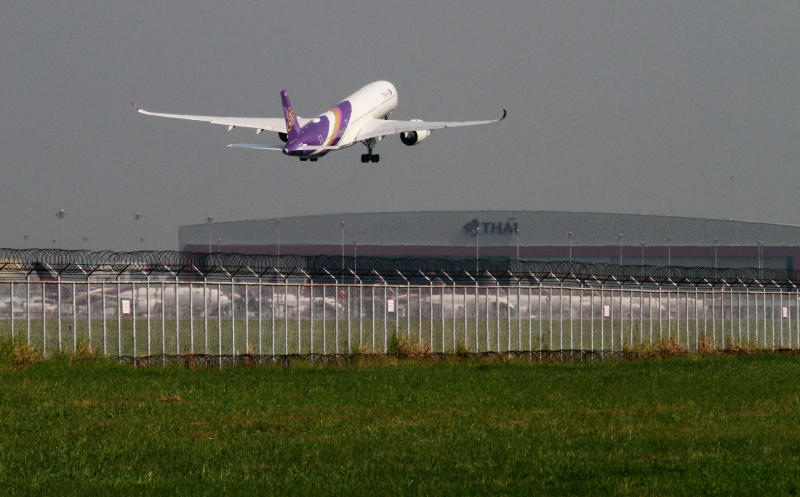
A Thai Airways International departs Suvarnabhumi airport. (Bangkok Post file photo)
               Thai Airways International Plc’s (THAI) fate is hanging by a thread with the national carrier facing crucial make-or-break decisions in the coming weeks.
               For several years, the debt-ridden airline’s finances have been in a sharp, downward spiral. A critic said that if THAI was a cat, it would be edging perilously close to the end of its ninth life. However, a lifeline has been promised by the government.
               But salvaging the airline — forced to suspend operations until the end of this month by the evaporation of air travel due to the Covid-19 pandemic — will not be easy and could cost the government a lot of political points.
               The airline, once a proud beacon among the ranks of profitable state enterprises, is under a plane-load of debt which stands at almost 300 billion baht.

               Political analysts said the debate over whether to rescue THAI or let it go under has spilled into the political arena with quite a few opposition figures questioning the merit of the government’s pledge to guarantee a bailout loan of 50 billion baht.

               On Monday, the Public Debt Management Office (PDMO) emerged as the one to secure the short-term loan for the airline to use as working capital, provided the cabinet approves its rehab plan.

               THAI will be the first SET-listed state enterprise for which the Finance Ministry will serve as a loan guarantor, according to PDMO director-general Patricia Mongkhonvanit.

               The law dictates that the Finance Ministry can guarantee loans worth no more than 20% of expenditure in any given year.

               Banyong Pongpanich, a former THAI board member, has advocated much stronger medicine for the airline, given the gravity of the financial crisis that it is in. The airline had suffered serious losses well before the coronavirus began its global assault late last year.

               An authoritative voice on the issue of turning the airline around, Mr Banyong previously sat on the State Enterprises Policy Commission, or the superboard, formed by the National Council for Peace and Order to overhaul the structure of state enterprises. THAI was one of the enterprises that needed rescuing, and fast.

               Mr Banyong said the loan guarantee would only prolong THAI’s life by five or six months at most. But as a creditor, the government would be able to dictate terms that could usher in substantial changes that would help put the airline back on track.

               His comments preceded an announcement last week by Prime Minister Prayut Chan-o-cha that the bailout guarantee would be a last-ditch effort by the government to save the airline. He noted the government had given THAI more than five years to put its affairs in order and fly out of the red, but to no avail.

               The national flag carrier posted a net loss of 2.11 billion baht in 2017, which ballooned to 11.6 billion baht in 2018 and 12 billion baht last year.

               THAI has reportedly been beset by a myriad of deeply-entrenched problems for many years, including ticket sales through agents rather than on online platforms which would have generated healthy revenue for the airline.

               Political decisions were also believed to be behind the costly purchases of aircraft which hurt THAI financially, according to a highly placed source in the company.

               The procurement of 10 fuel-guzzling, long-haul Airbus planes between 2002 and 2004 during the Thaksin Shinawatra administration proved controversial after deployment of the aircraft on the non-stop Bangkok-New York route ran up staggering losses of seven billion baht in three years.

               The source said the airline’s order for the four-engine Airbus 340-500s and 340-600s was influenced by the amount of commission payments attached to the purchases. The planes were later pulled from the fleet because they were no longer financially viable to operate and currently remain unsold with their value continuing to heavily depreciate.

               Many politicians oppose THAI’s bailout. Progressive Movement co-founder Thanathorn Juangroongruangkit said the government would be making a grave mistake if it resorted to using taxpayers’ money to prop up the airline.

               One reported plan to keep the airline flying would involve splitting the company into smaller commercial units specialising in catering, technical and ground services in a structure that positions THAI as a holding company.

               The plan would reportedly see THAI’s 21,000-strong workforce slashed by a quarter and the sell-off of some 30 planes with new aircraft procurement put on the backburner.

               Former finance minister and Kla Party leader Korn Chatikavanij, meanwhile, said while he backed the proposed rehabilitation of THAI, the bailout must be conditional.

               He said if the rescue had to involve taxpayers’ money in any way, the rehabilitation must be a sweeping one with a major overhaul mapped out and implemented.

               He added that the airline’s management, shareholders and creditors must jointly account for any damages incurred should the government-sponsored bailout fail.

               Some difficult questions must be answered as no one will lend to the airline with no strings attached.

               Mr Korn said if Gen Prayut was serious about pulling THAI out of crisis, he should state clearly that he wants the management, the shareholders and current creditors to accept an obligation to streamline the company and do more to ease the crushing burden the airline is carrying.

               Mr Korn’s party has suggested that the carrier file for bankruptcy, which would legally enable it to enter a rehabilitation programme. That would keep it flying to generate revenue which might help it stay afloat.

Korn: Backs conditional assistance

Prayut: Enjoys ratings boost

          Decree or no decree?

               The government appears well on its way to prolonging the state of emergency for another month or two even though the Covid-19 infection rate peaked long ago and dropped to zero on Wednesday, according to political observers.

               Speculation about extended enforcement of the emergency has been triggered by media reports that state agencies are conducting public opinion surveys on the impacts of the decree to help the government determine whether or not to lift it.

               First enforced in late March and originally due to expire on April 30, the decree has been extended until the end of this month.

               Said to be gathering public opinion on whether to keep or scrap the decree are the National Intelligence Agency and the Internal Security Operations Command (Isoc).

               While the decree has played a big part in containing the outbreak, it has hurt business activities and affected people’s livelihoods. Government critics are also concerned about misuse to stifle civil rights.

               Due to a drop in Covid-19 infections in the midst of lockdown relaxations which started on May 3, these critics deem the decree is no longer necessary and are demanding its revocation.

               However, it is believed the government does not want to lift the decree too soon as it thinks it has proved to be instrumental in containing transmission of the deadly virus.

               The decree allows the government to impose restrictions to curb people’s movements, including a six-hour curfew at night, business shutdowns and a ban on large public gatherings.

               It empowers Prime Minister Prayut Chan-o-cha to take control of key agencies tasked with combatting the pandemic.

               As chief of the Centre for Covid-19 Situation Administration, Gen Prayut can give direct orders to heads of state agencies such as the Public Health Ministry or the Commerce Ministry, which are under the supervision of coalition parties. This effectively cuts through the bureaucratic red tape that may have hindered efforts to curb the outbreak.

               The premier’s ratings have also reportedly received a big boost following the enforcement of the state of emergency.

               Political observers believe the public is likely to vouch for extended enforcement for another month to be sure that the situation is completely under control. The next phase of relaxation of the lockdown measures, expected later this month, should ease the pressure on the government.

               “A surge of new cases is possible and many are concerned that the impacts from a second wave would be far worse. People may want the decree to remain enforced for a little longer just to be on the safe side,” said one observer.

               A recent comment by National Security Council (NSC) secretary-general Somsak Roongsita has been seen by some as an indication that the emergency decree may not go away anytime soon, even though he insists whether to extend it depends on a number of factors such as the trend of infections over the coming days as well as the state of the economy and how resilient it is.

               “The decree has to be revoked eventually. It can’t stay forever,” Gen Somsak was quoted as saying following media reports about the opinion polls on prolonging the decree.

               However, political observers warn that the government should brace itself for a barrage of criticism including a demand for the immediate revocation of the decree as soon as the House of Representatives reconvenes late this month.

               Thailand is now learning from other countries about what measures to implement to prevent a second wave of Covid-19 infections. Moreover, how effective each measure is in countering any pending new wave is also being considered, Dr Taweesilp added.

               In another development, the Civil Aviation Authority of Thailand on Thursday approved a request to reopen Phuket airport from Saturday, said director Chula Sukmanop.

               An announcement was also issued regarding changes in rules and take-off and landing times to allow Phuket airport to reopen, he said.

               Pilot Officer Thani Cuangchu, director of Phuket airport, said the airport is ready for reopening with all necessary measures in place including strict Covid-19 screening and social distancing.

ดูข่าวต้นฉบับ
NEWSPAPER SECTION: NEWS

Loading

สมช. รับข้อเสนอปรับเคอร์ฟิวเป็น 5 ทุ่มถึงตี 3 คลินิกเสริมความงามทำหน้าได้ในเฟส 3

              “เลขาฯสมช.”แจงมาตรการผ่อนคลาย เฟส2 เป็นความเสี่ยงที่ใคร่ครวญแล้วว่าควบคุมได้ พร้อม รับข้อเสนอ ปรับเวลา “เคอร์ฟิว” เป็น 5 ทุ่ม ถึง ตี 3 พร้อมคลายล็อกเฟส 3 คลินิกเสริมความงามทำหน้าได้หากหมออนุญาต

               เมื่อวันที่ 16 พ.ค. ที่ศูนย์บริหารสถานการณ์การแพร่ระบาดของโรคติดเชื้อไวรัสโคโรน่า 2019 (COVID-19) หรือ ศบค. ทำเนียบรัฐบาล พล.อ.สมศักดิ์ รุ่งสิตา เลขาธิการสภาความมั่นคงแห่งชาติ (สมช.) แถลงว่า มาตรการผ่อนปรนระยะที่สอง ยังมีความเสี่ยงเพิ่มขึ้นเป็นลำดับ แต่เป็นความเสี่ยงที่เราได้ใคร่ครวญแล้ว ต่อให้อยู่ในความเสี่ยงก็สามารถควบคุมได้ และสาธารณสุขก็ยังมีขีดความสามารถรองรับความเสี่ยงนี้ได้ และหากพบกิจกรรม/กิจการใดที่จะได้รับการแพร่เชื้อ อาจจะปิดกิจกรรม/กิจการนั้น

               พล.อ.สมศักดิ์ กล่าวว่า ส่วนมาตรการบังคับใช้กฎหมายที่ยังคงไว้ คือ การเดินทางทางอากาศยังคงมีความเข้มข้นในระดับเดิม คือเรายังคงป้องกันไม่ให้มีการแพร่เชื้อที่เกิดจากการนำเข้าจากต่างประเทศไม่ว่าจะเป็นทางบกทางน้ำหรือทางอากาศ ยังไม่อนุญาตให้เครื่องบินพาณิชย์เข้ามา นอกจากนี้มีการปรับเวลาเคอร์ฟิวหรือการออกนอกเคหสถานในเวลา 23.00 – 04.00 น. และยังคงงดหรือชะลอการเดินทางเคลื่อนย้ายข้ามจังหวัดอยู่ ทั้งนี้ ไม่ได้ห้าม แต่ก็ขอให้อยู่บ้าน เพราะเป็นสถานที่ที่ปลอดภัยที่สุด แต่หากมีความจำเป็นที่จะต้องเดินทางเมื่อไปถึงปลายทาง หากจังหวัดนั้นมีมาตรการที่เข้มข้น ก็ต้องปฏิบัติตามที่กำหนด

               เมื่อถามว่า มีข้อเสนอแนะจากประชาชนอยากให้ปรับเวลาเคอร์ฟิวเป็นเวลา 03.00 น. ได้หรือไม่ เพราะมีประชาชนที่จะต้องขายของในตอนเช้าเพื่อที่จะไม่ได้รับผลกระทบในเรื่องของเวลา พล.อ.สมศักดิ์ กล่าวว่า ขอรับข้อเสนอนี้นำไปพิจารณา ส่วนจะเป็นไปได้หรือไม่ ขอนำไปหารือกันก่อน

               เลขาฯ สมช. กล่าวอีกว่า ส่วนข้อสงสัยเรื่องสถานเสริมความงามที่ให้เปิดได้แต่ยังไม่รวมถึงการทำที่เกี่ยวกับใบหน้านั้น เนื่องจากเรายอมเสี่ยงในบางเรื่องเพื่อชดเชยความสะดวกสบายของประชาชนและเพื่อกระตุ้นเศรษฐกิจบางตัวแต่ยังจะต้องมีมาตรการที่เข้มงวด ซึ่งการเสริมความงามนั้นเราก็ยอมแต่ไม่ใช่ในเรื่องของใบหน้าเพราะยังถือว่ามีความเสี่ยงที่จะติดเชื้อจากดวงตาได้ ซึ่งเป็นเหตุผลเดียวกับที่เราขอให้มีการล้างมือบ่อย ๆ และอย่าจับใบหน้า รวมถึงการจำกัดเวลาต่อกิจกรรมนั้น ๆ ให้ใช้เวลาให้น้อยที่สุด อย่างไรก็ตาม ตนจะขอรับไว้พิจารณาในการผ่อนคลายในเฟส 3 ซึ่งถ้าหากหมออนุญาตตนก็ไม่มีปัญหา

ดูข่าวต้นฉบับ

Loading

Govt mulls cut in curfew time

Emergency depends on rate of infection

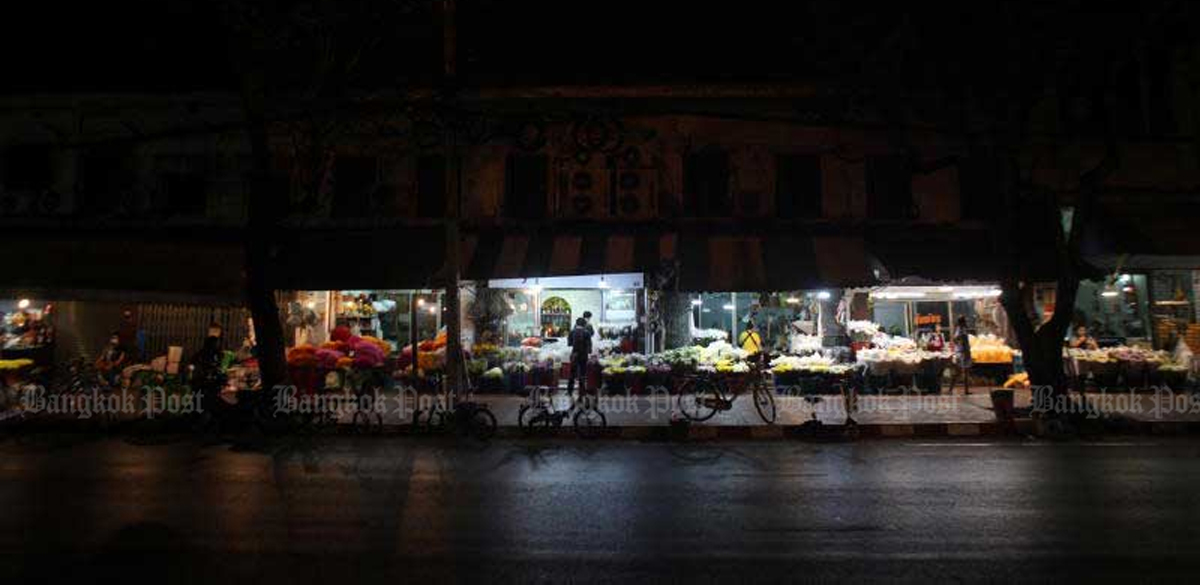
Pak Klong Talad, Bangkok’s flower market, is quiet shortly before the night curfew starts on April 23, 2020. (Photo by Arnun Chonmahatrakool)

               The government will on Friday discuss a proposal to shorten the 10pm-4am curfew by one hour to help boost the economy while a proposal to extend the state of emergency for another month will depend on whether Covid-19 curb relaxations are successful, according to a highly placed source.

               The 11pm-4am curfew proposal was formally discussed at Wednesday’s meeting of an ad hoc committee on easing Covid-19 restrictions, which was chaired by Gen Somsak Roongsita, secretary-general of the National Security Council (NSC), said the source.

               The proposal is expected to be forwarded to the main committee of the Centre for Covid-19 Situation Administration (CCSA), led by Prime Minister Prayut Chan-o-cha, for endorsement, said the same source.

               Among the proposals will be permission for teams of at most 10 TV and film crew to go out gathering news, up from the previous rule which stated that a maximum of five people per team were allowed, said the source.

               As for a tentative proposal to extend the emergency decree by another month from the end of this month, the same source said it will be finalised only 14 days after the implementation of the second phase of easing of Covid-19 restrictions expected to begin on Sunday.

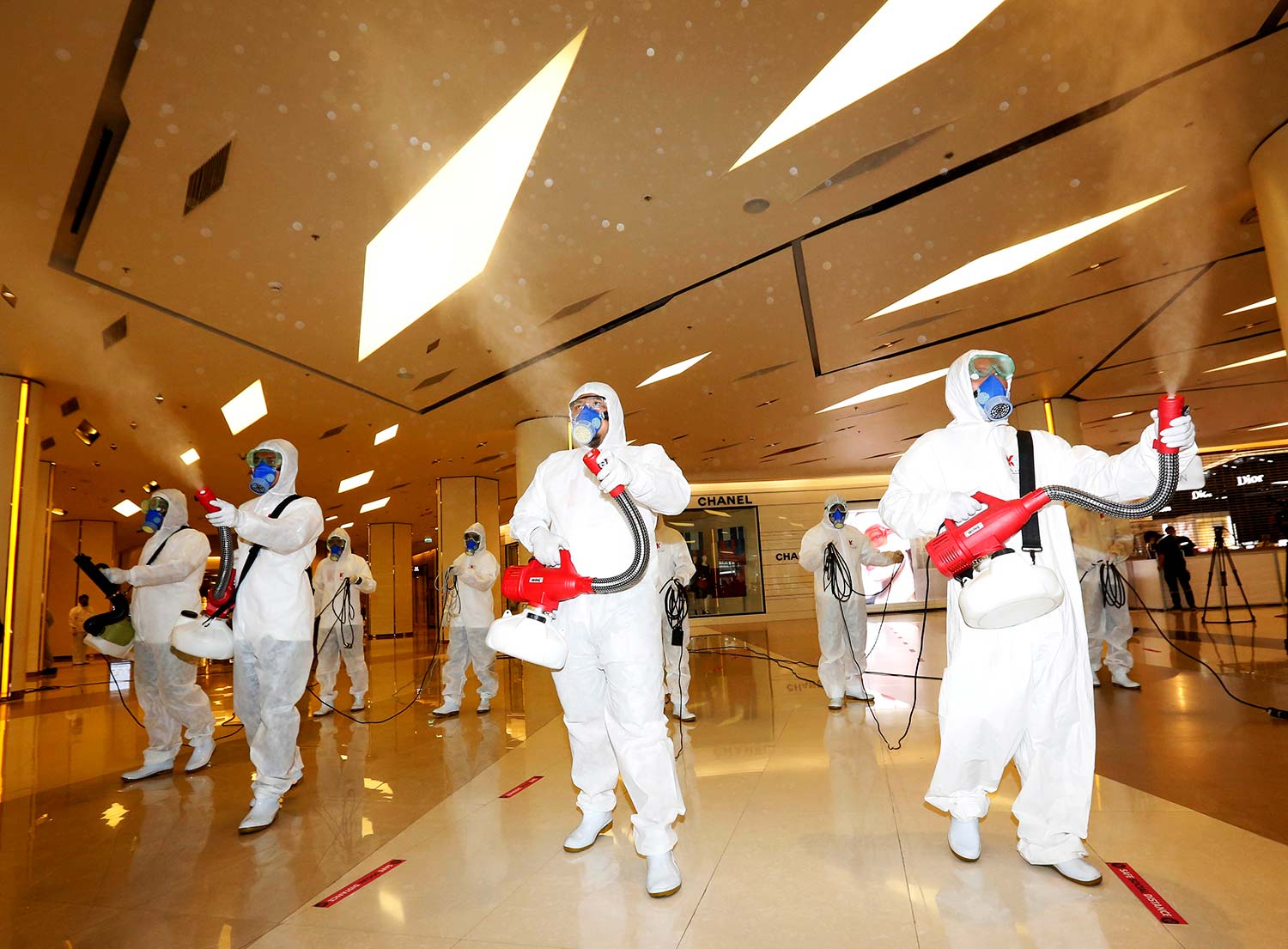
Who you gonna call? Germbusters!: Workers in full protective outfits spray disinfectant throughout the interior of Siam Paragon shopping complex in the capital, which is gearing up to reopen as soon as the government gives the green light. (Photo by Pattarapong Chatpattarasill)

               Deputy Prime Minister Wissanu Krea-ngam said many proposals including those for the upcoming second phase of Covid-19 restrictions easing have poured in but that clarity would be provided only after today’s meeting.

               PM’s Office Minister, Tewan Liptapallop, said several measures were required to facilitate the second phase of easing of Covid-19 restrictions expected to be approved by the CCSA committee today.

               The 11pm-4am curfew is expected to be one of them, he said.

               Meanwhile, CCSA spokesman Taweesilp Visanuyothin said that only one new case of Covid-19 was recorded in Thailand on Thursday, bringing the total number of infections to 3,018.

               The latest case involves a 39-year-old man who had previously worked in Phuket and returned to his hometown in Chiang Mai on May 2 along with his wife and children, according to Dr Taweesilp.

               The man didn’t show any symptoms but tested positive in a screening by a local health volunteer in the man’s hometown, said the doctor.

               “Because this infected patient didn’t develop any signs of Covid-19 infection, the health volunteer deserves to be credited for good work in detecting this new case,” he said.

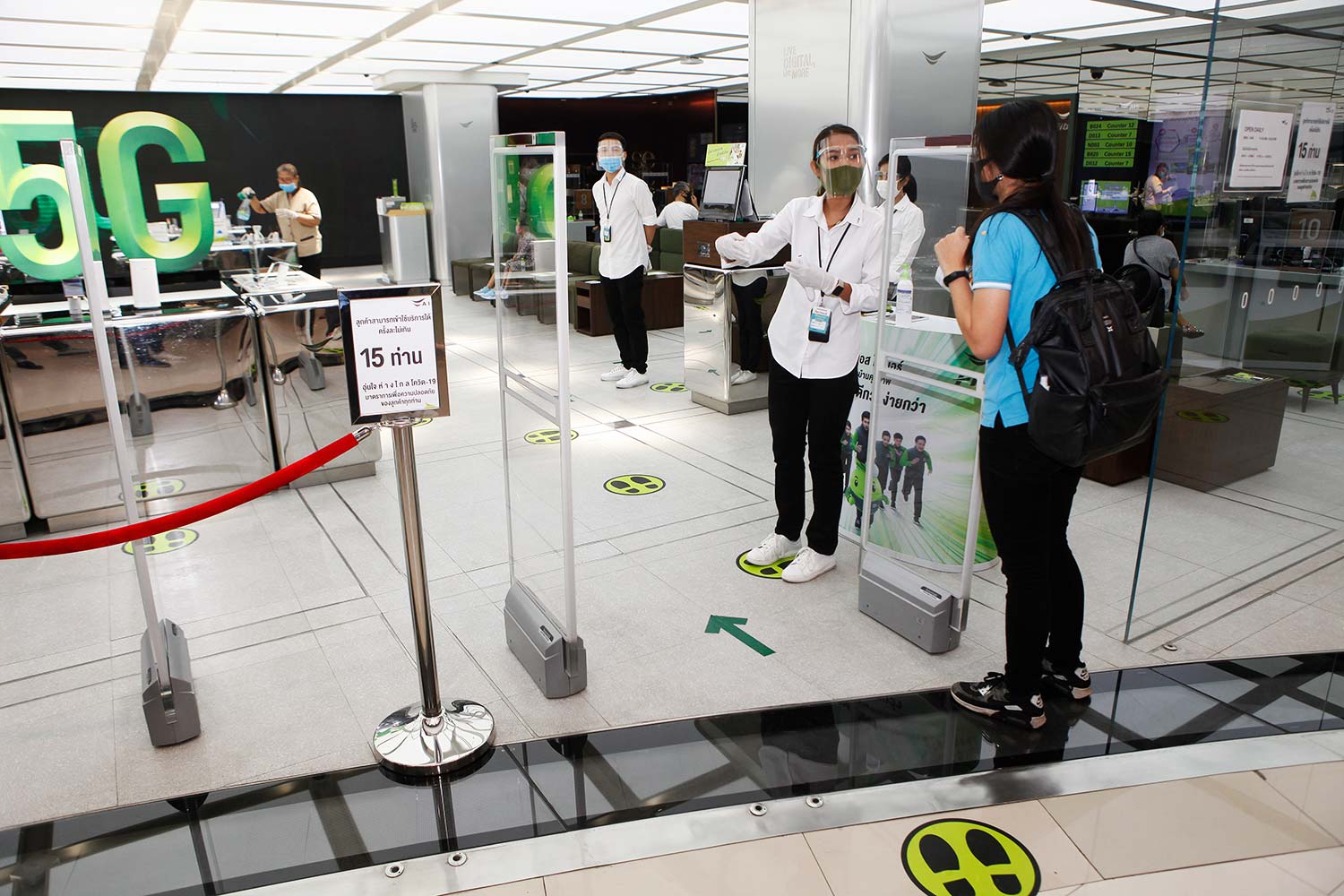
The new normal Staff at a mobile phone shop inside CentralWorld practise new methods of providing services, including limiting the number of customers in the store to between 10 and 15 at any given time to maintain social distancing. (Photo by Nutthawat Wicheanbut)

               Thailand is now learning from other countries about what measures to implement to prevent a second wave of Covid-19 infections. Moreover, how effective each measure is in countering any pending new wave is also being considered, Dr Taweesilp added.

               In another development, the Civil Aviation Authority of Thailand on Thursday approved a request to reopen Phuket airport from Saturday, said director Chula Sukmanop.

               An announcement was also issued regarding changes in rules and take-off and landing times to allow Phuket airport to reopen, he said.

               Pilot Officer Thani Cuangchu, director of Phuket airport, said the airport is ready for reopening with all necessary measures in place including strict Covid-19 screening and social distancing.

ดูข่าวต้นฉบับ
NEWSPAPER SECTION: NEWS
WRITER: POST REPORTERS

Loading

นายกฯ ตั้งคณะกรรมการเฉพาะกิจพิจารณาคลายล็อก

นายกรัฐมนตรีแต่งตั้งคณะกรรมการเฉพาะกิจพิจารณาการผ่อนคลายการบังคับใช้มาตรการในการป้องกันและยับยั้งการแพร่ระบาดของโควิด-19

               เมื่อวันที่ 13 พ.ค. เว็บไซต์ราชกิจจานุเบกษาเผยแพร่ คำสั่ง นายกรัฐมนตรี ที่ 22/2563 เรื่อง แต่งตั้งคณะกรรมการเฉพาะกิจพิจารณาการผ่อนคลายการบังคับใช้มาตรการในการป้องกันและยับยั้งการแพร่ระบาดของโรคติดเชื้อไวรัสโคโรนา 2019 (โควิด-19) ลงนามเมื่อวันที่ 12 พ.ค.2563 โดยมีเลขาธิการสภาความมั่นคงแห่งชาติ ในฐานะหัวหน้าสำนักงานประสานงานกลางศูนย์บริหารสถานการณ์โควิด-19 เป็นประธานกรรมการ หน้าที่และอำนาจคณะกรรมการฯ คือ

               1.  ประเมินสถานการณ์ วิเคราะห์ กลั่นกรอง รวบรวมความคิดเห็น ข้อเสนอแนะทางวิชาการ และข้อเสนอของภาคส่วนต่าง ๆ และจัดทำแนวทางผ่อนคลายการบังคับใช้มาตรการในการป้องกันและยับยั้งการแพร่ระบาดของโรคโควิด-19 ในทุกห้วงระยะเวลา 34 วัน เสนอต่อนายกรัฐมนตรีเพื่อพิจารณา

               2.  จัดทำร่างข้อกำหนดเพื่อผ่อนคลายการบังคับใช้มาตรการในการป้องกันและยับยั้งการแพร่ระบาดของโรคโควิด-19 รวมทั้งหลักเกณฑ์และวิธีการปฏิบัติสำหรับกิจการหรือกิจกรรมที่ผ่อนคลาย

               3.  ประสานการดำเนินการกับส่วนราชการ หน่วยงานของรัฐ และเอกชนที่เกี่ยวข้อง ตลอดจนเชิญผู้แทนส่วนราชการ หน่วยงานของรัฐ หรือผู้เกี่ยวข้องมาให้ข้อมูล ข้อเท็จจริงความเห็น หรือส่งเอกสารหลักฐานใด ๆ ที่เกี่ยวข้องเพื่อประกอบการพิจารณา

               4.  แต่งตั้งคณะอนุกรมการ คณะทำงาน หรือมอบหมายเจ้าหน้าที่ที่เกี่ยวข้องเพื่อช่วยเหลือ การปฏิบัติหน้าที่หรือดำเนินการตามที่คณะกรรมการมอบหมายได้ตามความจำเป็นและเหมาะสม

               5.  ปฏิบัติหน้าที่อื่นตามที่นายกรัฐมนตรีหรือศูนย์บริหารสถานการณ์โควิด-19 มอบหมาย

ดูข่าวต้นฉบับ

Loading

Top